Native American Color Traditions: Sacred Palettes of Indigenous Design
· Coloracci Team
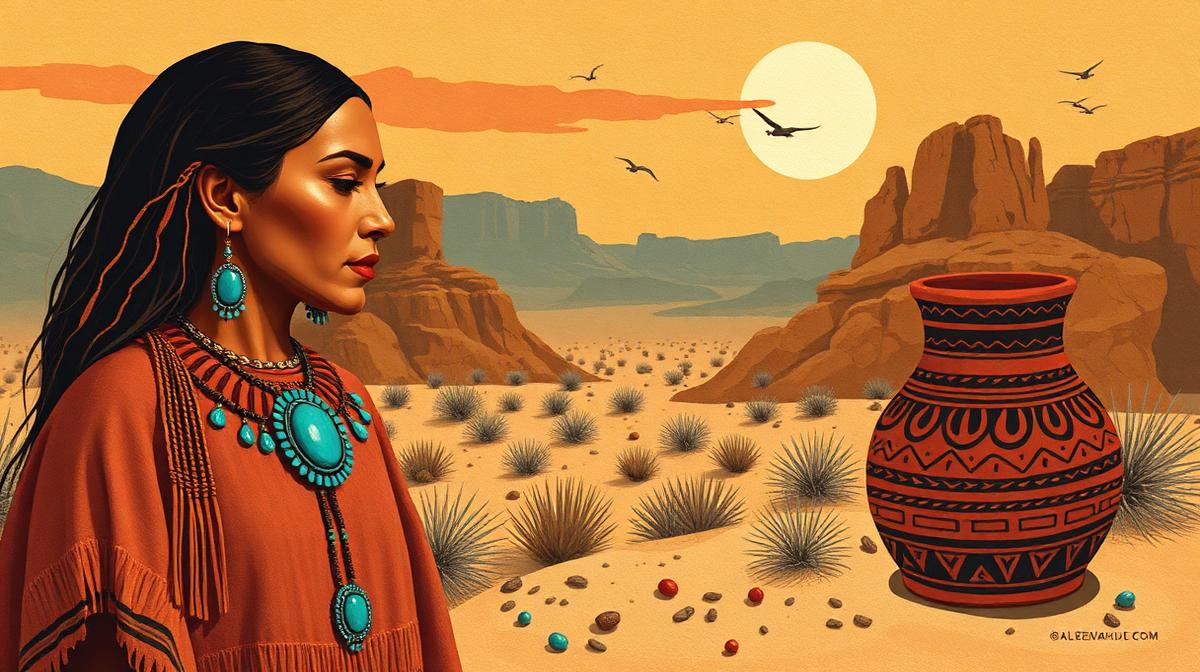
Native American Color Traditions: Sacred Palettes of Indigenous Design
Color in Native American cultures is never merely decorative. Each hue carries spiritual significance, connecting to the natural world, ancestral wisdom, and the sacred geography of the land. Understanding these color traditions offers designers not just palette inspiration, but a deeper appreciation for how color can carry profound cultural meaning.
The Four Directions Color System
A Universal Framework with Regional Variations
The most widely recognized color system across Native American cultures is the Medicine Wheel or Four Directions, which maps colors to cardinal points. While specifics vary by nation, a common framework includes:
| Direction | Color | Meaning | Element |
|---|---|---|---|
| East | Yellow (#FFD700) | Illumination, new beginnings | Air/Wind |
| South | Red (#CC3333) | Growth, youth, trust | Earth |
| West | Black (#1A1A1A) | Introspection, harvest | Water |
| North | White (#F5F5F0) | Wisdom, elders, purity | Fire |
Lakota Sioux Interpretation
The Lakota Sioux associate colors with specific life stages and spiritual qualities:
- Red (Wi): The sacred direction of the south, representing warmth, life-force, and the path of youth
- Yellow (Wiyóhinyanpata): The east, where the sun rises, symbolizing spiritual illumination
- Black (Wazíyata): The west, where the sun sets, representing the spirit world and introspection
- White (Wazíyata): The north, symbolizing wisdom, endurance, and the cold winds that test the spirit
Cherokee Color Associations
The Cherokee Nation uses a slightly different color mapping that includes additional associations:
- Red: Success, triumph, and power in warfare
- Blue (#4169E1): Trouble, defeat, and spiritual unease
- Black: Death, but also the source of powerful medicine
- White: Peace, happiness, and the sacred fire
Earth Pigments: The Original Color Palette
Natural Pigment Sources
Native American artists developed sophisticated methods for extracting colors from the natural world:
Red Ochre (#CC4422): Ground from iron oxide deposits, red ochre is perhaps the oldest pigment in human history. Found across North America, it was used for body paint, pottery, and rock art. The red pigment at ancient Cahokia mounds dates to 1050 CE.
Yellow Ochre (#D4A017): Iron oxyhydroxide minerals provided warm yellow tones used in Pueblo pottery and Plains war paint.
Turquoise (#40E0D0): While the mineral itself was used in jewelry (particularly by Southwestern nations), turquoise pigments were also ground for ceremonial painting. The Pueblo peoples considered turquoise sacred, representing sky and water.
Charcoal Black (#1C1C1C): Burned wood, bone, or manganese oxide created deep blacks used for outline work and ceremonial face painting.
White Clay (#F0EDE5): Kaolin and chalk deposits provided whites used in body painting, pottery slip, and sand painting.
The Significance of Natural Materials
The connection between pigment source and meaning was inseparable. A red made from sacred red clay carried different spiritual weight than a red made from berries. This material-meaning unity is a concept modern sustainable designers are rediscovering—the story of how a color is made matters as much as how it looks.
Textile and Weaving Colors
Navajo Weaving Traditions
Navajo weaving represents one of the most sophisticated color systems in indigenous art:
Classic Period (1650-1868): Limited to natural wool colors—white, brown (#8B6914), and indigo blue (#1F3A5F) obtained through trade. This constraint produced strikingly elegant designs.
Transitional Period (1868-1900): Commercial dyes introduced Germantown red (#B22222), orange (#FF6B35), and green (#2E8B57), dramatically expanding the palette.
Revival Period (1920-present): A return to vegetal dyes and natural colors, with master weavers like Daisy Taugelchee creating extraordinary palettes from plants, minerals, and insects.
The Navajo Color Philosophy
In Navajo cosmology, colors correspond to times of day:
- White (#FEFEFE): Dawn—the east, emergence, and new beginnings
- Blue (#4682B4): Midday—the south, sky, and the world of the living
- Yellow (#DAA520): Twilight—the west, transformation, and the setting sun
- Black (#0D0D0D): Night—the north, darkness, and the realm of spirits
These associations influenced everything from the placement of colors in sand paintings to the orientation of hogans (traditional homes).
Pottery and Ceramic Colors
Pueblo Pottery Traditions
Each Pueblo community developed distinctive color palettes:
San Ildefonso Pueblo: Famous for Maria Martinez's black-on-black pottery, where matte black designs appear on polished black surfaces. The blackware achieves its color through reduction firing—smothering the kiln to create carbon-rich conditions.
Acoma Pueblo: Known for fine white (#FAF0E6) slip decorated with geometric patterns in orange (#D2691E) and brown (#654321), creating what collectors call the "Acoma palette."
Hopi Pueblo: Traditional yellow-ware pottery uses local clay that fires to warm gold (#C9A964), decorated with black and red designs.
Color as Cultural Identity
Pottery colors weren't aesthetic choices—they were cultural signatures. A knowledgeable observer could identify which pueblo produced a pot based on its color palette alone. This concept of "color as identity" directly parallels modern brand color systems.
Beadwork and the Trade Era
Pre-Contact Materials
Before European contact, Native American beadwork used:
- Shell beads: White and purple wampum
- Porcupine quills: Dyed with plant materials
- Seeds and stones: Natural tones
The Glass Bead Revolution
European glass trade beads (from approximately 1600 onward) introduced an explosion of color:
- Pony beads: Large beads in limited colors
- Seed beads: Tiny beads in dozens of colors, enabling intricate designs
The most popular beadwork colors and their meanings:
- Red (#E41B17): Life, vitality, and sacred power
- Blue (#2956B2): Sky, water, and the Great Spirit
- Yellow (#FFD700): Sun, warmth, and harvest
- Green (#228B22): Earth, growth, and healing
- White (#FFFFFF): Snow, purity, and peace
- Black (#000000): Night, mystery, and power
Totem Poles and Northwest Coast Colors
The Formline Palette
Northwest Coast art (Haida, Tlingit, Kwakiutl) uses a distinctive color system:
Primary formline colors:
- Black (#0A0A0A): Primary forms, outlines, and defining shapes
- Red (#8B0000): Secondary forms, interior details
- Blue-Green (#1B6B5F): Tertiary elements, background fills (historically a later addition)
The meaning hierarchy:
- Black represents the structure of the natural world
- Red represents blood, life-force, and supernatural power
- Blue-green represents the space between worlds
Carving and Painting Integration
Northwest Coast artists achieved their colors using:
- Black: Charcoal, graphite, or lignite
- Red: Red ochre or hematite mixed with salmon eggs (as a binder)
- Blue-green: Copper oxide or vivianite mineral
Sand Painting: Ephemeral Color Art
Navajo Healing Ceremonies
Sand paintings (more accurately called "dry paintings") are created as part of healing ceremonies. The colors have strict spiritual assignments:
- White: Made from ground gypsum, sandstone, or cornmeal
- Blue: Ground turquoise, lapis lazuli, or charcoal mixed with white
- Yellow: Corn pollen, yellow ochre, or sandstone
- Black: Charcoal, jet, or roasted corn
- Red: Red sandstone, ochre, or iron oxide
The paintings are intentionally destroyed after the ceremony, reinforcing the idea that color serves a temporary, purposeful function—not decoration.
Modern Applications and Cultural Sensitivity
Respectful Design Inspiration
When drawing inspiration from Native American color traditions, designers should:
- Research specific nations: "Native American" encompasses hundreds of distinct cultures—each with unique color traditions
- Avoid sacred imagery: Medicine wheels, specific ceremonial patterns, and clan symbols should not be used commercially
- Credit and collaborate: Partner with indigenous artists and communities
- Focus on principles, not patterns: Learn from the relationship between color and meaning rather than copying specific designs
Contemporary Native Artists Using Traditional Colors
Modern indigenous artists are reclaiming and evolving traditional color palettes:
- Jeffrey Gibson (Choctaw-Cherokee): Combines traditional beadwork colors with Pop Art
- Wendy Red Star (Apsáalooke): Uses traditional palette within contemporary photography
- Cannupa Hanska Luger (Mandan, Hidatsa, Arikara, Lakota): Recontextualizes earth tones in large-scale installations
Building Earth-Tone Palettes
The natural pigment traditions of Native American art offer a masterclass in earth tone palettes. Use tools like Coloracci's AI color generator to create palettes inspired by natural pigments—warm ochres, deep iron reds, and cool turquoise tones that connect design to the natural world.
Explore more cultural color traditions: African Color Traditions, Korean Color Traditions, Aboriginal Australian Colors, or Indian Color Traditions.