Indian Color Traditions: From Holi Festival to Sacred Symbolism in Design
· Coloracci Team
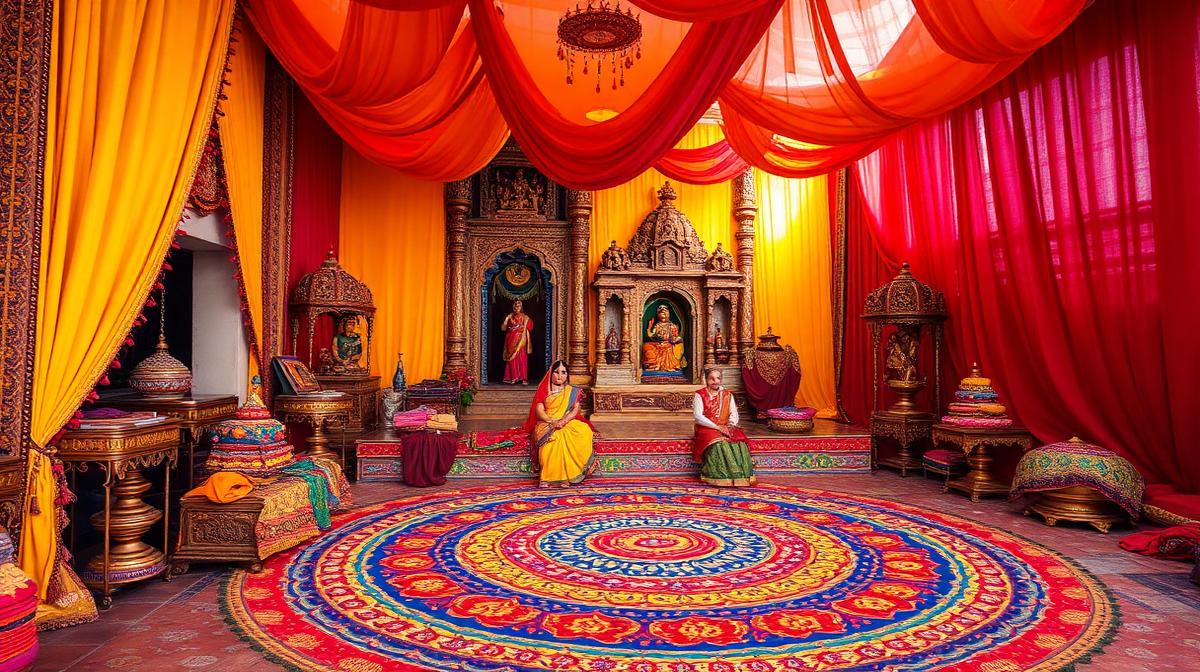
The Chromatic Soul of India
In the narrow lanes of Jaipur's old city, Lakshmi Devi, a 73-year-old rangoli artist, kneels before her doorway at dawn. She carefully sprinkles colored powders into intricate patterns: vermilion red for prosperity, turmeric yellow for auspicious beginnings, indigo for the divine, green for new life.
"Colors are prayers made visible," she explains to passing tourists. "Each hue speaks to different gods, different blessings, different aspects of existence."
This perspective—that color is not merely aesthetic but spiritual, not decorative but devotional—permeates every aspect of Indian culture. From the explosive joy of Holi to the sacred saffron of Hindu monks, from the bridal red of weddings to the mourning white of funerals, Indian color traditions offer designers a profound symbolic system that has evolved over 4,000 years of continuous civilization.
Understanding these traditions requires moving beyond simplistic "exotic" stereotypes into the sophisticated philosophical, religious, and social meanings that give Indian colors their power. This guide explores that depth, offering practical applications for designers working with Indian themes or targeting Indian audiences.
The Sacred Saffron: India's Most Powerful Color
Saffron (काशी / kāshī) occupies a unique position in Indian color psychology—simultaneously religious, political, and cultural:
Spiritual Significance:
- Renunciation: Worn by Hindu, Buddhist, and Jain monks who have left worldly attachments
- Fire and purification: Represents the burning away of ego and impurities
- Knowledge and learning: Associated with ancient universities and scholarship
- Courage and sacrifice: Military and martyrdom connections
Political Dimensions: India's flag features saffron at the top, representing courage and sacrifice. Various political movements have adopted saffron as their identifying color, making it one of the most politically charged hues in Indian culture.
Hex Code Applications:
| Saffron Shade | Hex Code | Context |
|---|---|---|
| Deep Saffron | #FF6B00 | Religious, traditional, bold |
| Light Saffron | #F4C430 | Academic, sophisticated, modern |
| Golden Saffron | #D4AF37 | Luxury, premium positioning |
| Burnt Saffron | #CC5500 | Earthy, grounded, organic |
Design Strategy: Saffron commands respect and attention. It's ideal for brands positioning themselves as knowledgeable, courageous, or spiritually oriented. However, its strong religious associations require careful context—avoid saffron for casual entertainment brands or products targeting purely secular audiences.
Red (लाल / Lāl): The Color of Prosperity and Power
Red dominates Indian celebrations with an intensity that makes even Chinese red seem subtle. Its meanings include:
- Marriage and fertility: Brides traditionally wear red; sindoor (vermilion in hair parting) signifies married status
- Protection: Red wards off evil eye and negative energies
- Power and authority: Associated with Durga, the warrior goddess
- Prosperity: Lakshmi, goddess of wealth, favors red
The Bridal Red Phenomenon: Research by the Indian Wedding Industry Council shows that 78% of traditional Indian weddings feature red as the dominant bridal color. Modern designers serving this market must understand red's non-negotiable centrality.
Regional Variations:
- North India: Deep vermilion (#DC2626) dominates
- South India: Maroon and burgundy (#7F1D1D) are preferred
- East India: Brighter crimson (#EF4444) with gold
- West India: Orange-red (#EA580C) with mirror work
Color Psychology Research: Studies at the Indian Institute of Technology found that red retail environments increase purchase intent by 31% compared to neutral spaces, significantly higher than the global average of 12%. This suggests deep cultural conditioning beyond universal color psychology.
Yellow and Turmeric: Auspicious Beginnings
Yellow (पीला / Pīlā) derives its sacred status from turmeric (हल्दी / haldī), the golden spice that permeates Indian life:
Sacred and Auspicious Uses:
- Haldi ceremony: Pre-wedding turmeric paste application for purification
- Religious offerings: Yellow flowers, particularly marigolds, for deities
- Knowledge and learning: Associated with Saraswati, goddess of wisdom
- Spring and renewal: Basant Panchami festival celebrations
The Turmeric Color Code:
| Turmeric Shade | Hex Code | Application |
|---|---|---|
| Fresh Turmeric | #F4C430 | Food, organic, natural |
| Dried Turmeric | #DAA520 | Traditional, warm, earthy |
| Marigold | #FFB700 | Festive, celebratory, bright |
| Mustard | #FFDB58 | Sophisticated, modern, muted |
Modern Design Applications: Yellow works exceptionally well for food brands, educational institutions, and spring-themed campaigns. Its natural associations make it ideal for organic and wellness positioning.
Indigo and Blue: The Divine and the Eternal
Indigo (नीला / Nīlā) carries profound spiritual significance in Indian tradition:
Spiritual Associations:
- The infinite: Krishna, the dark-blue deity, represents cosmic love
- Protection: Blue wards off evil eye (hence "nazar" amulets are blue)
- Serenity and depth: Associated with meditation and spiritual practice
- Night and mystery: The color of dreams and the subconscious
Historical Context: India's indigo dye was so prized that it sparked colonial conflicts and trade wars. The "Blue City" of Jodhpur and the indigo farming traditions of Bengal represent India's deep historical connection to this color.
Design Palette:
| Blue Type | Hex Code | Best For |
|---|---|---|
| Indigo | #4B0082 | Spiritual, luxury, depth |
| Royal Blue | #4169E1 | Trust, authority, corporate |
| Peacock | #005F6B | Exotic, traditional, nature |
| Midnight | #191970 | Sophisticated, mysterious |
Green: Islam, Nature, and New Beginnings
Green (हरा / Harā) carries multiple significant associations:
Religious Symbolism:
- Islam: Sacred color for India's large Muslim population
- New life: Associated with spring festivals and renewal
- Nature and environment: Growing modern significance
- Prosperity: Connection to agricultural abundance
The Peacock Connection: India's national bird, the peacock, features iridescent greens that have inspired artists for millennia. Peacock green (#00A693) appears in everything from Mughal miniature paintings to contemporary fashion.
Green Applications:
| Green Type | Hex Code | Usage |
|---|---|---|
| Peacock Green | #00A693 | Luxury, traditional, nature |
| Emerald | #50C878 | Islamic contexts, premium |
| Mint | #98FF98 | Modern, fresh, youthful |
| Olive | #808000 | Earthy, organic, grounded |
White: Purity, Mourning, and Spiritual Practice
White (सफेद / Safēd) presents interesting contrasts to Western associations:
Primary Meanings:
- Mourning and death: Traditional funeral color (widows wear white)
- Purity and simplicity: Sadhus (holy men) wear white
- Peace and non-violence: Gandhi's legacy and political symbolism
- Cleanliness and hygiene: Hospitals, medical contexts
Regional Variations: In South India, white is more acceptable for positive contexts due to different textile traditions. Kerala's traditional white and gold kasavu saris demonstrate elegant celebratory white usage.
Modern Shift: Younger Indians increasingly embrace white for weddings and celebrations, influenced by Western media. However, traditional communities maintain strong white/mourning associations.
Holi Festival: The Explosion of Color Psychology
Holi, the festival of colors, offers the most vivid demonstration of Indian chromatic culture:
The Color Throwing Tradition:
- Red (gulal): Love and fertility
- Yellow (haldi): Turmeric's blessing
- Blue (indigo): Krishna's playfulness
- Green: Spring and new life
Psychological Impact: Research by the National Institute of Mental Health and Neurosciences found that Holi celebrations significantly reduce seasonal affective disorder symptoms, with the combination of community, music, and vibrant color exposure creating measurable mood elevation.
Contemporary Design Inspiration: Holi's palette—explosive combinations of pink, yellow, blue, green, and purple—inspires modern Indian design aesthetics. Brands like FabIndia and Good Earth have built successful visual identities around "Holi-inspired" color stories.
Regional Color Traditions: A Geographic Journey
Rajasthan: The Land of Vibrant Contrasts
- Jaipur Pink: The "Pink City's" terracotta and rose tones
- Jodhpur Blue: Indigo-washed houses creating "Blue City" aesthetic
- Udaipur White: Marble palaces and white cityscape
- Jaisalmer Gold: Golden sandstone "Golden City"
Design Application: Rajasthani color schemes work for bohemian, artisanal, and luxury positioning.
Kerala: Serene Whites and Golds
- Kasavu: Cream white with pure gold borders
- Temple gold: Religious and ceremonial contexts
- Tropical greens: Lush vegetation influence
- Azure blues: Backwaters and coastal influence
Design Application: Keralan palettes suit sophisticated, minimalist, and wellness-oriented brands.
Bengal: Bold Reds and Contrasts
- Shakha pola: Red and white bridal bangles
- Jamini Roy colors: Earthy reds, greens, yellows in folk art
- Durga Puja vibrancy: Explosive celebratory palettes
Design Application: Bengali colors work for artistic, literary, and intellectual brand positioning.
Punjab: Bright and Celebratory
- Phulkari embroidery: Neon-bright floral patterns
- Mustard fields: Yellow landscape dominance
- Wedding vibrancy: Maximum color saturation
Design Application: Punjabi palettes suit energetic, youthful, and celebratory brands.
The Textile Color Legacy: Dyeing Traditions
India's textile heritage profoundly influences color perception:
Natural Dye Traditions:
- Madder red: The famous Turkey red dye of India
- Indigo: Bengal's blue gold
- Pomegranate yellow: Traditional turmeric alternatives
- Lac dye: Insect-derived deep reds
Contemporary Relevance: The slow fashion movement has revived interest in these natural dye colors. Brands emphasizing sustainability often reference traditional Indian dye palettes.
Hex Code Reference: Essential Indian Colors
Sacred and Spiritual
| Color | Hex Code | Hindi Name | Meaning |
|---|---|---|---|
| Saffron | #FF6B00 | काशी | Renunciation, knowledge, sacrifice |
| Vermilion | #DC2626 | सिंदूर | Marriage, fertility, protection |
| Turmeric | #F4C430 | हल्दी | Auspicious beginnings, purification |
| Indigo | #4B0082 | नीला | Divine, infinite, protection |
Regional Heritage
| Color | Hex Code | Region | Context |
|---|---|---|---|
| Jaipur Pink | #D4A5A5 | Rajasthan | Heritage, architecture |
| Jodhpur Blue | #4A5568 | Rajasthan | Identity, tradition |
| Kerala Gold | #D4AF37 | Kerala | Ceremonial, luxury |
| Bengali Red | #C41E3A | Bengal | Cultural, artistic |
Modern Indian Fusion
| Color | Hex Code | Application |
|---|---|---|
| Masala | #D2691E | Food, spice, warmth |
| Mango | #FFC324 | Modern festive, youthful |
| Lotus | #FFB7C5 | Spiritual, feminine, soft |
| Spice Route | #8B4513 | Heritage, adventure, premium |
Design Framework: Using Indian Colors Authentically
The Devotional Design Principle
Indian color usage traditionally serves spiritual purposes. Modern designers should consider:
- Intention: What blessing or meaning should the color convey?
- Appropriateness: Does this context honor the color's traditional use?
- Harmony: Do colors work together in traditional combinations?
- Respect: Are sacred colors being used with proper reverence?
Color Combinations That Work
Traditional Combinations:
- Red + Gold: Weddings, prosperity, celebration
- Saffron + White: Religious, spiritual, scholarly
- Green + White: Islamic contexts, nature, peace
- Blue + Silver: Night festivals, modern elegance
Contemporary Fusions:
- Turmeric + Coral: Modern festive, youthful energy
- Indigo + Rose Gold: Sophisticated traditional
- Mint + Saffron: Fresh interpretation of heritage
- Peacock + Champagne: Luxury with cultural roots
Categories and Their Colors
Wedding Industry:
- Primary: Vermilion red (#DC2626)
- Secondary: Gold (#FFD700)
- Accents: Turmeric yellow (#F4C430), Emerald green (#50C878)
Food and Beverage:
- Primary: Turmeric (#F4C430), Saffron (#FF6B00)
- Secondary: Fresh green, Warm red
- Accents: Spice browns, Mango yellows
Spiritual/Wellness:
- Primary: Saffron (#FF6B00), Indigo (#4B0082)
- Secondary: White (#FFFFFF), Sandalwood
- Accents: Lotus pink, Peacock green
Fashion/Lifestyle:
- Primary: Regional heritage colors
- Secondary: Contemporary neutrals
- Accents: Metallic golds and silvers
Conclusion
Indian color traditions offer designers a sophisticated palette where every hue carries millennia of meaning. The challenge lies not in using these colors superficially but in understanding the philosophical and cultural depths that give them power.
From the sacred saffron of renunciation to the bridal red of prosperity, from the turmeric yellow of auspicious beginnings to the indigo blue of divine protection, Indian colors tell stories that resonate across time and geography.
Modern Indian design successfully bridges these traditions with contemporary aesthetics—brands like Good Earth, Jaywalking, and Nicobar demonstrate that authentic cultural color usage can be both respectful and commercially successful.
Tools like Coloracci's AI Color Palette Generator can help explore these complex cultural combinations, while our Color Psychology Guide provides broader context for applying color meaning strategically.
Whether designing for Indian audiences or seeking inspiration from one of the world's most color-conscious cultures, the principles remain: understand the meaning, respect the tradition, and let color speak the language of the soul.
Explore more cultural color systems with our guides to Chinese Color Traditions, Japanese Color Symbolism, and Mediterranean Color Palettes.