Aboriginal Australian Color Traditions: Earth Pigments and Dreamtime Narratives
· Coloracci Team
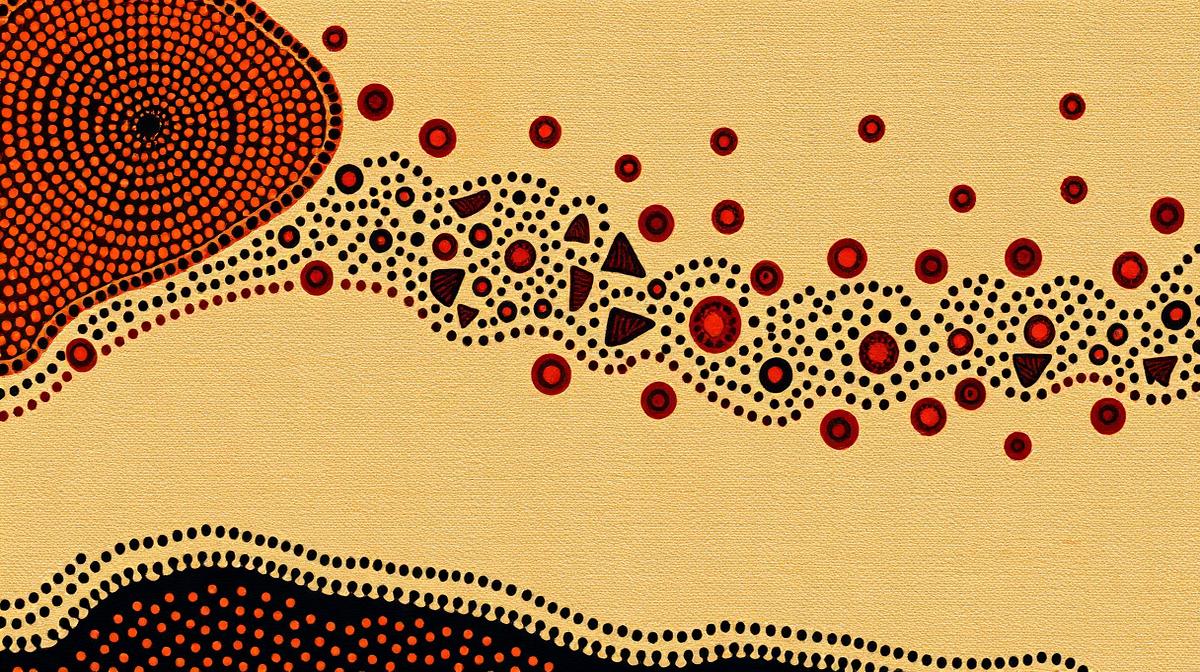
Aboriginal Australian art represents the world's oldest continuous artistic tradition — over 65,000 years of unbroken color use. This chromatic heritage predates every other color system discussed in design literature by tens of thousands of years. Understanding Aboriginal color traditions provides not just cultural appreciation but profound insight into humanity's deepest relationship with color.
The Earth Pigment Palette
The Four Sacred Colors
Aboriginal Australian art traditionally works with four primary pigments derived from the earth:
| Color | Source | Hex Range | Symbolic Meaning |
|---|---|---|---|
| Red ochre | Iron oxide clay | #CC5533 - #8B0000 | Blood, life force, ceremony, earth |
| Yellow ochre | Limonite clay | #CC7722 - #FFD700 | Sun, women's knowledge, certain ceremonies |
| White | Kaolin clay, gypsum | #F5F5F0 - #FFFFFF | Spirit world, death, clouds, water |
| Black | Charcoal, manganese | #1A1A1A - #000000 | Night, mystery, formal occasions |
Why Earth Pigments Matter
These four colors weren't chosen arbitrarily — they represent:
- Material availability: Aboriginal peoples used what the land provided, creating an inherent connection between art and country
- Permanence: Earth pigments are among the most stable colorants known — rock paintings have survived 40,000+ years
- Spiritual connection: The pigments come from the same earth that holds ancestral spiritual significance
- Trade networks: Specific ochre deposits were traded across vast distances, creating continental color-trade routes
- Medicinal properties: Some ochres had antiseptic and protective properties
The Ochre Trade Routes
Red ochre was particularly valued:
- Wilgie Mia mine (Western Australia): One of the oldest known mines in the world, operating for 40,000+ years
- Trade distances: Ochre was traded over 1,000+ kilometers across the continent
- Economic value: High-quality ochre was one of the most valuable trade commodities
- Ceremonial significance: Specific ochre sources held spiritual power beyond their color
Dot Painting: The Modern Expression
Origins and Evolution
The contemporary dot painting movement, which emerged in the 1970s at Papunya, transformed Aboriginal art visibility globally.
The Color Strategy of Dot Painting
Dot painting uses earth tones in sophisticated ways:
- Dot density: Color intensity controlled by how closely dots are placed
- Color gradients: Smooth transitions achieved through gradual color change across thousands of dots
- Symbolic encoding: Specific colors in specific positions encode cultural knowledge
- Concealment and revelation: Some information is hidden within color patterns, visible only to initiated viewers
Contemporary Palette Expansion
While maintaining earth-tone foundations, contemporary Aboriginal artists have expanded:
- Acrylic paints: Providing a broader spectrum while often referencing traditional tones
- Blue and green additions: Representing water, sky, and vegetation
- Metallic accents: Some artists incorporate metallic colors for contemporary effect
- Fluorescent touches: Occasional use for impact, particularly in urban Aboriginal art
Dreamtime Color: Spiritual Landscapes
The Concept of Country
Aboriginal color is inseparable from "Country" — a concept encompassing land, sky, water, people, animals, plants, and spiritual forces:
- Landscape as palette: The colors of art directly reference the colors of specific landscapes
- Seasonal color: Different colors predominate in art reflecting different seasons and their activities
- Aerial perspective: Many Aboriginal paintings represent landscape from above, using color to distinguish terrain types
- Water colors: Blue and white patterns represent waterholes, rivers, and rain — critical survival knowledge encoded in art
The Songline Color Map
Songlines — pathways across the land encoded in song — use color as navigation:
- Red paths: Sacred or ceremonially significant routes
- Yellow markers: Resource locations (food, water, ochre)
- White connecting lines: Travel paths and kinship connections
- Black boundaries: Significant demarcations or warning areas
Rock Art: 40,000 Years of Color
Kimberley Wandjina Figures
The Wandjina spirit paintings of the Kimberley region demonstrate specific color protocols:
- White faces: Representing the spirit beings, using kaolin
- Red outlines: Ochre boundaries defining the sacred form
- Black eyes: Charcoal creating the distinctive large, lidless eyes
- No mouths: Wandjina are depicted mouthless, with color defining their presence
Arnhem Land X-Ray Art
X-ray art from Arnhem Land uses color to reveal internal structures:
- External outline: Usually red or black ochre
- Internal organs: White or yellow to show bone, spine, and internal features
- Background integration: Figures placed against the natural rock color
- Cross-hatching (Rarrk): Fine parallel lines in contrasting colors creating clan-specific patterns
Hand Stencils
Among the oldest art forms (dating to 40,000+ years):
- Negative prints: Hand placed on rock, pigment blown around it
- Color variety: Red, yellow, white, and occasionally black
- Multiple layers: Hands from different time periods creating palimpsest color compositions
- Size variation: Adult and child hands, recording community presence over millennia
Bark Painting: The Cross-Hatching Tradition
Rarrk Patterns
Cross-hatching (rarrk) in bark painting serves multiple functions:
- Clan identification: Specific patterns belong to specific clan groups
- Spiritual power: The fine detail of rarrk is believed to shimmer with ancestral power
- Color precision: Alternating fine lines of red, yellow, white, and black create optical mixing
- Skill demonstration: The quality of rarrk reflects the artist's knowledge and authority
Bark Painting Color Conventions
| Element | Color | Significance |
|---|---|---|
| Main figures | Red ochre | Life force, physicality |
| Background | Yellow ochre or natural bark | Country, earth |
| Internal detail | White | Spirit, bone, water |
| Outlines | Black | Definition, formality |
| Cross-hatching | Multiple alternating | Clan identity, spiritual power |
Contemporary Aboriginal Art and Color
The Urban Aboriginal Movement
Urban Aboriginal artists have developed new color approaches:
- Street art influences: Bold, graphic styles with expanded color palettes
- Political color: Using contemporary colors for social justice messaging
- Pop art fusion: Aboriginal motifs in pop art color palettes
- Digital media: New color possibilities in video, animation, and digital art
The Art Market and Color
Aboriginal art's global market has influenced color choices:
- Gallery expectations: Some color choices are influenced by international art market preferences
- Authenticity debates: Questions arise about when expanded palettes remain culturally authentic
- Commercial pressure: Bright, colorful works sometimes sell better than traditional earth tones
- Elder guidance: Many communities maintain protocols about color use in commercial art
Aboriginal Color and Modern Design
Design Lessons from Aboriginal Color
Aboriginal color traditions offer valuable principles for contemporary designers:
- Material honesty: Use the colors your materials naturally provide
- Landscape connection: Let your local environment inform your palette
- Symbolic consistency: Maintain meaning behind color choices across applications
- Temporal depth: Consider how colors will age, change, and evolve over time
- Community color: Colors should reflect and serve the community that uses them
Respectful Engagement
Designers inspired by Aboriginal color traditions should:
- Never copy: Aboriginal art and its color systems are cultural property
- Collaborate: Work with Aboriginal artists and communities directly
- Credit and compensate: Acknowledge inspiration and share economic benefits
- Learn context: Understand the spiritual and cultural significance behind color choices
- Seek permission: Some colors, patterns, and styles have restricted use protocols
The Flag: A Modern Color Statement
The Aboriginal Australian flag, designed by Harold Thomas in 1971, distills millennia of color meaning:
- Black (top half): The Aboriginal people
- Red (bottom half): The earth, ochre, spiritual connection to land
- Yellow (center circle): The sun, giver of life
This flag demonstrates how Aboriginal color principles translate powerfully into modern symbolic communication — three colors carrying 65,000 years of meaning.
Aboriginal Australian color traditions remind us that color is never merely aesthetic. It is knowledge encoded in earth, stories painted in ochre, and identities carried across millennia. In a design world obsessed with the new, Aboriginal color teaches the profound power of the ancient and the enduring.