Russian & Slavic Color Traditions: From Onion Domes to Constructivist Red
· Coloracci Team
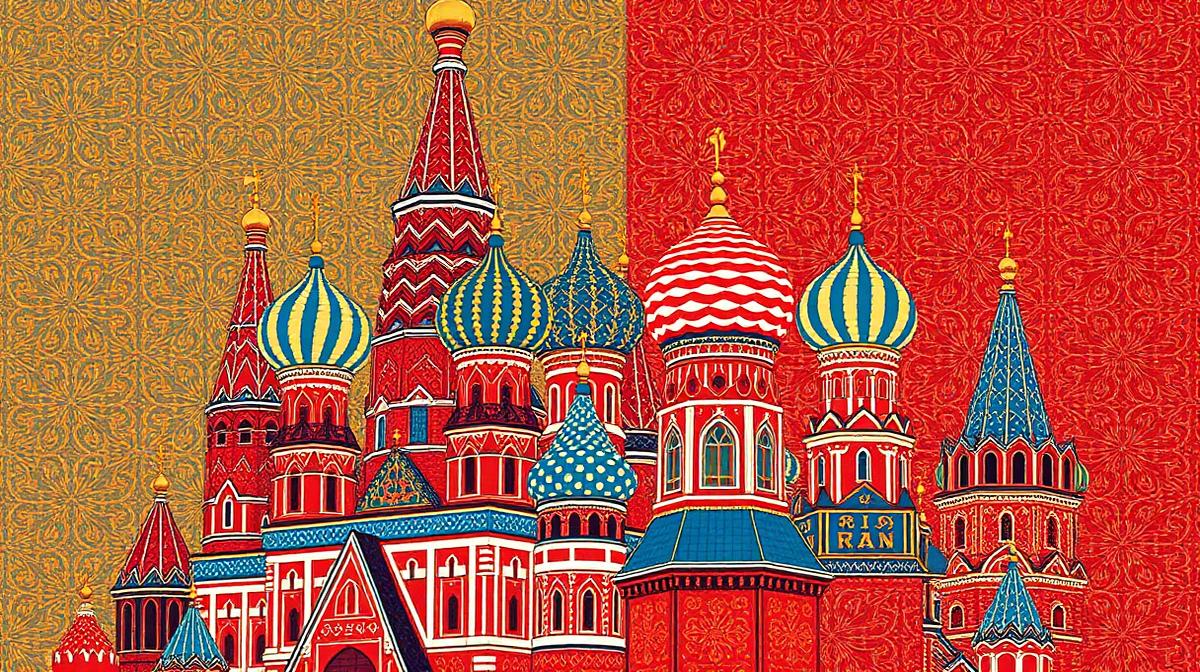
Russian & Slavic Color Traditions: From Onion Domes to Constructivist Red
Russian color tradition spans a thousand years, from the golden icons of Byzantine-influenced Orthodoxy to the revolutionary red of Soviet avant-garde design. This extraordinary range makes Russian and Slavic color culture one of the most dramatically varied in the world—encompassing deep spiritual symbolism, folk art vibrancy, and radical modernist innovation.
Orthodox Church Color Symbolism
The Language of Icons
Russian Orthodox iconography uses one of the world's most codified color systems:
| Color | Russian Term | Hex Code | Sacred Meaning |
|---|---|---|---|
| Gold | Zoloto | #FFD700 | Divine light, the uncreated energy of God |
| Deep Red | Krasnyi | #8B0000 | Christ's sacrifice, divine love |
| Blue | Siniy | #000080 | Heaven, the Mother of God, eternity |
| White | Belyi | #FAFAFA | Purity, resurrection, divine truth |
| Green | Zelyonyi | #228B22 | Holy Spirit, eternal life, youth |
| Purple | Fioletovyi | #4B0082 | Royalty, priesthood, penitence |
| Black | Chyornyi | #0A0A0A | Evil, death, hell, absence of God |
Key insight: In Russian, the word "красный" (krasnyi) means both "red" and "beautiful"—revealing how deeply the color is woven into the cultural consciousness. Red Square (Krasnaya Ploshchad) literally means "Beautiful Square."
The Gold Ground Tradition
Russian icons feature gold backgrounds not as decoration but as theology in color:
- Gold represents the divine light that exists outside of earthly space
- The gold ground eliminates perspective—placing the viewer in sacred, timeless space
- Gold leaf application is itself a spiritual practice, performed with prayer
Liturgical Color Calendar
The Russian Orthodox Church prescribes specific vestment colors for different occasions:
- White: Christmas, Epiphany, Transfiguration, Easter
- Blue: Feasts of the Mother of God
- Red: Easter week, martyrs' feast days
- Green: Pentecost, Trinity Sunday, monks' feast days
- Purple/Burgundy: Lent, the Cross
- Black: Weekdays of Great Lent
Folk Art and the Peasant Palette
Khokhloma: The Golden Wood
Khokhloma painted woodenware uses a distinctive three-color system:
- Black (#0D0D0D): Background, creating dramatic contrast
- Red (#CC0000): Berries, flowers, and organic forms
- Gold (#DAA520): Leaves, vines, and metallic accents
This palette—black, red, and gold—has become synonymous with Russian folk identity and appears in everything from airline liveries to restaurant chains.
Gzhel: Blue and White Porcelain
The Gzhel ceramics tradition uses a single-color system:
- Cobalt blue (#003399) on white (#FFFFFF) porcelain
- Intensity varies from pale wash to deep solid
- The range of blues creates complete tonal compositions without any other color
Design lesson: Gzhel demonstrates that a single-color palette, when used with full tonal range, can create extraordinary visual richness—a principle directly applicable to monochromatic color schemes.
Matryoshka: The Nesting Doll Palette
Traditional matryoshka dolls use a warm, folk-inspired palette:
- Red (#CC3333): Dominant color, representing beauty and vitality
- Yellow (#E6B422): Secondary warmth, sunlight and grain
- Green (#2E7D32): Nature, fertility, and growth
- Black (#1A1A1A): Outlines and hair details
- Pink (#FFB6C1): Flesh tones and floral accents
Constructivism: Revolution in Color
The Red and Black Revolution
Soviet Constructivism (1917-1932) created perhaps the most influential graphic design movement of the 20th century, built on a radical color reduction:
The Constructivist palette:
- Revolutionary Red (#CC0000): The color of communism, workers' power, and radical change
- Black (#000000): Industrial strength, typography, and mechanical precision
- White (#FFFFFF): The space of possibility, the blank canvas of the new world
- Occasionally: Yellow (#FFD700): Energy, wheat, and industrial output
El Lissitzky's Color Theory
El Lissitzky's "Beat the Whites with the Red Wedge" (1919) is a masterclass in using color as political communication:
- Red triangle: Active, aggressive, penetrating—the Bolshevik force
- White circle: Passive, static, surrounded—the White Army
- Black elements: Structural, supporting the red's dominance
This work proved that color alone can communicate complex narratives—a principle that modern political branding, protest design, and social media campaigns still exploit.
Rodchenko's Color Experiments
Alexander Rodchenko explored color reduction to its extreme:
- "Pure Red Color" (1921): A canvas of solid red—declaring the end of easel painting
- "Pure Yellow Color" (1921): Pure yellow as an autonomous entity
- "Pure Blue Color" (1921): Pure blue completing the primary triad
These works anticipated minimalist design, flat UI, and the power of solid color in branding by nearly a century.
The Fabergé Color Legacy
Imperial Egg Palettes
Fabergé eggs represent the pinnacle of Russian luxury color:
- Guilloche enamel: Translucent colored enamel over engine-turned gold, creating shimmering surfaces
- Easter colors: Pastel blues (#A3C4E8), pinks (#F4B4C8), greens (#8FBC8F), and whites
- Imperial purple (#4B0082) and gold (#DAA520): Reserved for the most prestigious commissions
Design application: Fabergé's technique of translucent color over metallic substrates anticipates modern glass morphism and metallic gradient effects in luxury digital design.
The Soviet Palette
Socialist Realism Colors
Soviet art mandated specific color approaches:
- Warm, optimistic tones: Sunny skies (#87CEEB), golden wheat (#DAA520), rosy cheeks (#E8A090)
- Red throughout: Banners (#CC0000), stars, scarves, and propaganda posters
- Heroic lighting: Dramatic chiaroscuro with warm, uplifting key lights
- Avoided: Dark, pessimistic palettes; ambiguous color relationships
Soviet Architecture Color
Stalinist architecture introduced a distinctive palette:
- Pale yellow (#F5E6A8): Official government buildings (known as "Stalin yellow")
- Cream (#FFF8DC): Residential buildings
- Dark red (#800020): Accent trim and government signage
- Gray (#808080): Industrial and military structures
Modern Russian Design
Contemporary Applications
Modern Russian designers draw from this rich heritage:
- Neo-Constructivist branding: Red, black, and white with geometric forms
- Folk-inspired packaging: Khokhloma and Gzhel patterns adapted for consumer goods
- Luxury Russian brands: Fabergé-inspired metallics and enamel effects
Building Slavic-Inspired Palettes
For folk-inspired design: Combine Khokhloma red (#CC0000), gold (#DAA520), and black (#0D0D0D) with warm wood tones
For revolutionary/bold design: Use Constructivist red (#CC0000), black (#000000), and white (#FFFFFF) with diagonal compositions
For luxury/premium design: Apply Fabergé-inspired pastels with gold (#DAA520) and translucent effects
Use Coloracci's AI palette tools to generate authentic Slavic-inspired palettes for your projects, and ensure accessibility with our contrast checker.
Explore more cultural color traditions: Persian & Iranian Colors, Korean Color Traditions, Greek Color Traditions, or Victorian Color Revival.