Greek Color Traditions: From Marble Temples to Aegean Blue Design
· Coloracci Team
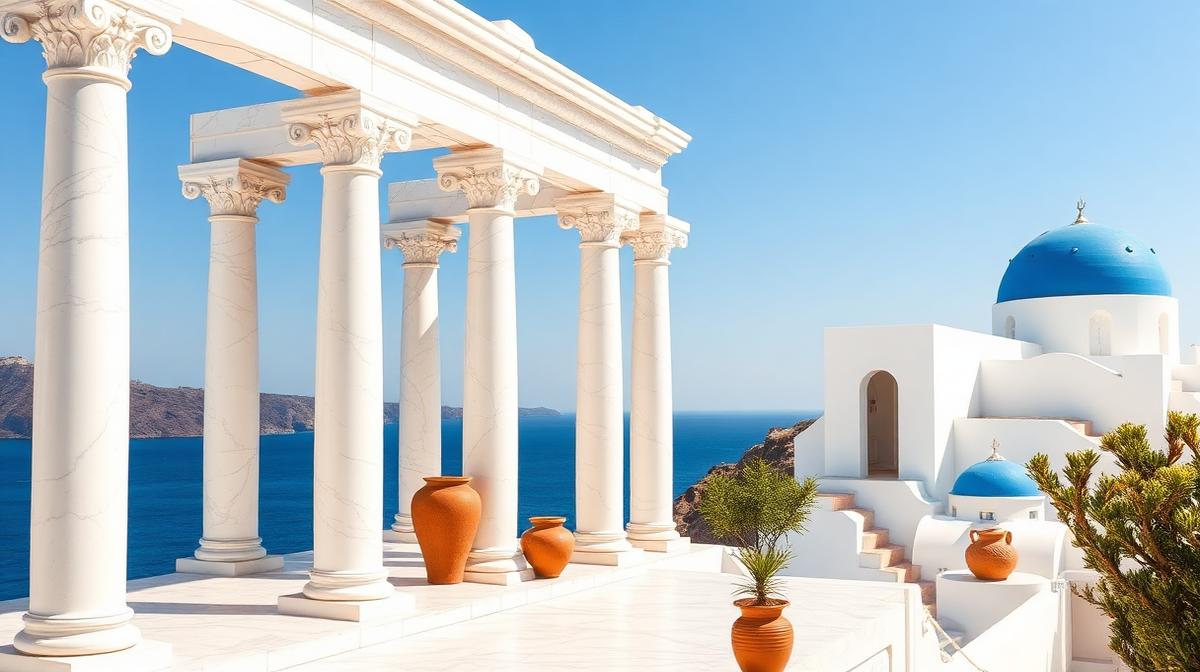
Greek Color Traditions: From Marble Temples to Aegean Blue Design
The popular image of ancient Greece as a world of pristine white marble is one of art history's greatest misconceptions. Greek temples, sculptures, and public spaces were actually explosions of color—painted in vivid reds, blues, golds, and greens. Understanding the true Greek color tradition—from antiquity through the iconic blue-and-white of the Cycladic islands—reveals a culture deeply invested in color's power to communicate meaning.
The Polychrome Revolution
The Myth of White Marble
For centuries, European artists and architects took ancient Greek ruins at face value—seeing bare white marble as an intentional aesthetic choice. The Neoclassical movement (18th-19th centuries) built entire design philosophies around this misconception, creating white-columned buildings from Washington DC to London.
The truth is dramatically different. Archaeological evidence proves that Greek temples were painted in vivid colors:
The Parthenon's original palette:
- Egyptian Blue (#1034A6): Architectural details, triglyphs
- Vermillion Red (#E34234): Background panels, moldings
- Yellow Ochre (#CC9933): Sun motifs, decorative bands
- Gold leaf (#FFD700): Highlights on sculptures and capitals
- Green (#2E7D32): Plant motifs, wreaths
- Black (#0D0D0D): Outlining and definition
The Four-Color Theory
Ancient Greek philosopher Empedocles proposed that all colors derived from four elements:
- White (Earth/Lime): Purity, death, the underworld
- Black (Carbon/Charcoal): Fertile earth, mystery
- Red (Iron oxide/Cinnabar): Blood, life, action
- Yellow (Ochre/Saffron): Sunlight, divinity
Pliny the Elder recorded that the greatest Greek painters—Apelles, Aetion, Melanthius, and Nicomachus—chose to work with only these four colors (tetrachromata), creating masterpieces from extreme constraint.
Classical Greek Color Symbolism
Colors of the Gods
Greek mythology assigned specific colors to deities:
| Deity | Colors | Hex Codes | Symbolism |
|---|---|---|---|
| Zeus | Purple, gold | #6A0DAD, #FFD700 | Royal authority, sky |
| Athena | Blue, gray, olive | #4A6FA5, #808080, #6B8E23 | Wisdom, warfare, peace |
| Aphrodite | Rose, gold, sea green | #FF69B4, #FFD700, #2E8B57 | Love, beauty, ocean-born |
| Ares | Blood red, bronze | #CC0000, #CD7F32 | War, violence |
| Demeter | Green, gold, brown | #228B22, #DAA520, #8B4513 | Harvest, earth, fertility |
| Poseidon | Deep blue, white | #003366, #FFFFFF | Ocean, waves, storms |
| Hades | Black, dark purple | #0A0A0A, #2D0A31 | Underworld, death |
| Apollo | Gold, white | #FFD700, #FFFAF0 | Sun, purity, art |
The Greek Textile Palette
Ancient Greek textiles used colors to indicate social status:
- Purple (Tyrian purple #6A0DAD): Royalty and extreme wealth—more expensive than gold
- Saffron yellow (#F4C430): Worn by women during festivals and ceremonies
- White (#FAFAFA): Everyday wear, philosophical purity
- Red (#CC3333): Soldiers' cloaks (Spartan crimson)
- Black (#1A1A1A): Mourning and the philosopher's cloak
Cycladic Island Colors
The Iconic Blue and White
The instantly recognizable blue-and-white palette of Santorini, Mykonos, and the Cycladic islands has specific origins:
Whitewash (#FFFFFF): Lime-based whitewash served multiple practical purposes:
- Reflected intense Mediterranean sunlight, cooling interiors
- Antimicrobial properties helped prevent disease
- Cheap and readily available
- Created a unified, clean-looking village aesthetic
Greek Blue (#0047AB): The blue domes, shutters, and doors use specific blue pigments:
- Traditionally made from a mixture of lime and loulaki (local blue pigment)
- Blue was believed to ward off evil spirits
- During the Greek military junta (1967-1974), blue and white were mandated as a patriotic color scheme
- The specific shade varies—from cobalt to turquoise—creating visual richness within the system
The Santorini Palette Beyond Blue and White
The full Cycladic palette includes:
- Caldera blue (#0066B3): Roof domes and shutters
- Lime white (#FFFFFF): Walls and pathways
- Bougainvillea pink (#FF1493): Flowering vines as accent color
- Volcanic gray (#4A4A4A): Local volcanic stone
- Terracotta (#C65D3E): Pottery, roof tiles, and flower pots
- Sea green (#2E8B57): Door frames and window accents
Byzantine Greek Color
The Mosaic Tradition
Byzantine Greek art, centered in Constantinople and extending through Greek Orthodox churches, developed an extraordinary mosaic color system:
Gold tesserae (#FFD700): Made from gold leaf sandwiched between glass layers, creating a shimmering divine light. Gold backgrounds represented the heaven beyond earthly space.
Deep blue (#000080): Symbolized heaven and the Virgin Mary's cosmic role
Imperial purple (#6A0DAD): Reserved for Christ and the Emperor—a direct color statement of divine-imperial authority
Red (#8B0000): Christ's sacrifice and the blood of martyrs
Icon Painting Colors
Greek Orthodox icon painters followed strict color rules:
- Gold or ochre background: Divine uncreated light
- Blue: Heaven, contemplation, the Mother of God
- Red: Earthly life, royalty, the Incarnation
- Green: Youth, fertility, the Holy Spirit
- White: Resurrection, purity, divine glory
- Purple: Divine royalty, the meeting of heaven and earth
Modern Greek Design
The Mediterranean Design Palette
Contemporary Mediterranean design draws directly from Greek color traditions:
For hospitality/resort design: Aegean blue (#0066B3) + White (#FFFFFF) + Sand (#E8D5B7) + Terracotta (#C65D3E)
For luxury/premium brands: Byzantine gold (#DAA520) + Deep purple (#4B0082) + White marble (#F0EDE8)
For food and beverage: Olive green (#6B8E23) + Warm white (#FAF0E6) + Honey gold (#DAA520) + Red (#CC3333)
Applying Greek Color Principles
- Simplicity with depth: The blue-and-white system proves that two colors, used with variation, can create infinite visual interest
- Color from nature: Greek palettes derive from local materials—stone, sea, sky, earth
- Spiritual meaning: Every color choice can carry deeper significance beyond aesthetics
- Light as design partner: Greek architecture uses sunlight as a design element—color changes throughout the day are features, not bugs
Creating Greek-Inspired Palettes
Use Coloracci's AI tools to extract authentic Mediterranean palettes from Greek island photography, then adapt them for your design projects. The simplicity and warmth of Greek color traditions translate beautifully to hospitality design, wedding venues, and coastal branding.
Explore more cultural color traditions: Mediterranean Coastal Colors, Persian & Iranian Colors, Renaissance Art Colors, or Moroccan Riad Colors.