Car Showroom Color Psychology: Premium Palettes That Close Deals
· Coloracci Team
Car Showroom Color Psychology: Premium Palettes That Close Deals
A car purchase is one of the largest emotional investments most consumers make. The showroom environment—where decisions worth tens of thousands of dollars happen in minutes—uses color as a sophisticated persuasion tool. From the moment a customer enters, every color choice is engineered to build confidence, justify premium pricing, and accelerate the buying decision.
The Psychology of Automotive Display
Why Dark Showrooms Sell Expensive Cars
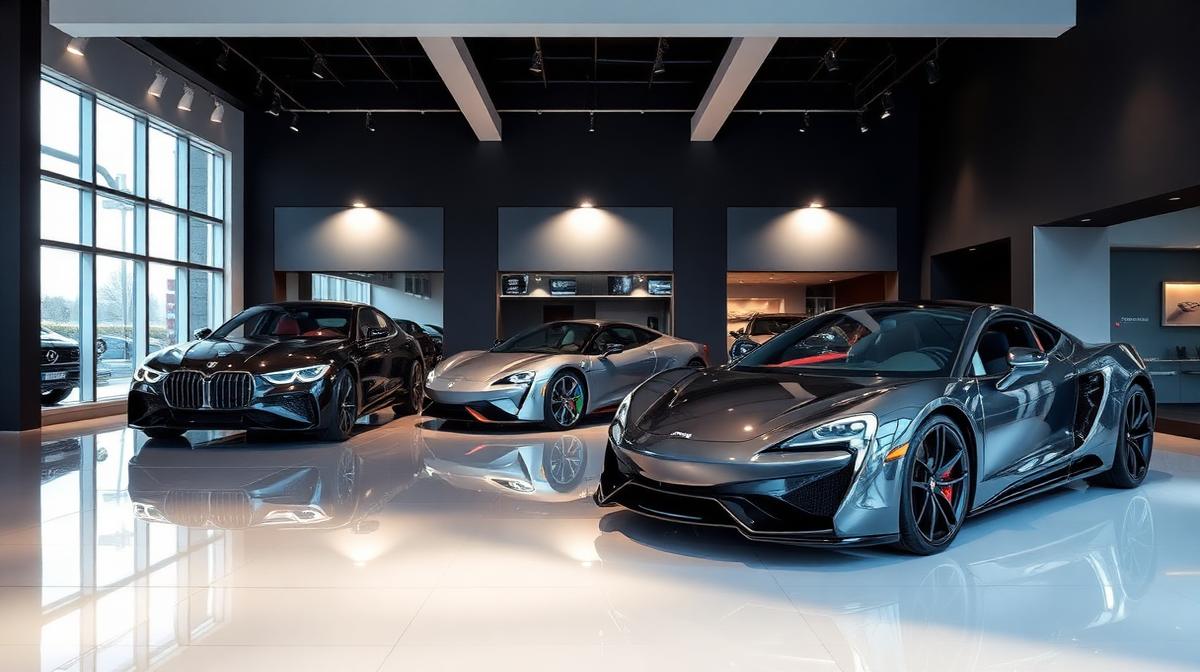
Luxury automotive brands overwhelmingly use dark showroom environments:
| Brand | Wall Color | Hex Code | Floor | Lighting |
|---|---|---|---|---|
| Mercedes-Benz | Charcoal | #2C2C2C | Polished dark gray | Warm spots |
| BMW | Dark gray | #1A1A1A | Dark polished concrete | Cool white spots |
| Audi | Near-black | #141414 | Light gray polished | Neutral spots |
| Porsche | White | #F5F5F5 | Light gray | Bright, even |
| Ferrari | Dark charcoal | #1C1C1C | Polished marble | Dramatic spots |
Why dark works:
- Theater effect: Dark environments focus attention on illuminated vehicles
- Perceived value: Objects displayed in dark environments are valued 30-40% higher
- Color accuracy: Dark walls reduce color bounce, showing car paint more accurately
- Luxury association: Dark environments mirror high-end galleries and jewelry stores
- Emotional containment: Dark spaces feel intimate and exclusive
The Porsche Exception
Porsche deliberately uses bright white showrooms (#F5F5F5) because their brand positioning emphasizes:
- Engineering transparency—nothing to hide
- Sport/performance—clean, precise, technical
- Color customization—white backgrounds show the full range of their paint options
This proves that the "dark = luxury" rule has exceptions when brand values demand a different approach.
Showroom Color Zones
The Arrival/Reception Zone
First impressions determine the entire showroom experience:
- Floor: Polished concrete (#A0A0A0) or marble (#E8E0D5)—clean, premium, reflective
- Walls: Brand-specific neutral (dark gray for luxury, light gray for mainstream)
- Reception desk: High-quality material in brand accent color or dark wood (#3E2723)
- Lighting: 3500-4000K, warm enough to be welcoming but cool enough to feel professional
The Display Floor
Where vehicles are presented:
- Background walls: Dark (#1A1A1A to #333333) to make cars glow under spotlights
- Floor: Highly reflective surface creates mirror-like car reflections—increasing visual impact
- Turntable areas: Medium gray (#808080) or dark floor for hero vehicles
- Color temperature: 4000-5000K for accurate paint color rendering
The Consultation Area
Where pricing and negotiation happen:
- Warmer tones: Shift toward warmth to build rapport and trust
- Comfortable seating: Dark leather (#2C2C2C) or brand-colored fabric
- Desk surface: Warm wood (#6B4423) or dark stone
- Lighting: 3000-3500K, intimate but professional
The Delivery Bay
Where customers receive their new vehicle:
- Bright, celebratory lighting: Full brightness to see every detail
- Clean background: White or light gray for photography opportunities
- Brand elements: Prominent logo and brand colors
- Red carpet or brand-color flooring: Creating a special moment
Car Paint Color Psychology
The Color-Value Connection
Car color directly affects resale value and buyer psychology:
| Car Color | Market Share | Perceived Owner | Resale Impact |
|---|---|---|---|
| White (#FFFFFF) | 26% | Modern, clean | Neutral |
| Black (#0A0A0A) | 22% | Powerful, premium | Slight premium |
| Gray (#808080) | 18% | Conservative, sophisticated | Neutral |
| Silver (#C0C0C0) | 12% | Tech-savvy, practical | Slightly below average |
| Blue (#003399) | 10% | Trustworthy, confident | Neutral |
| Red (#CC0000) | 7% | Bold, passionate | Below average (except sports cars) |
| Green (#006400) | 2% | Environmental, unique | Below average |
| Other | 3% | Individualistic | Varies widely |
The "Safe Choice" Effect
Over 78% of cars sold are white, black, gray, or silver—an extreme color conservatism driven by:
- Resale anxiety: Buyers fear unusual colors will hurt resale value
- Social conformity: Conservative colors are "safe" in professional settings
- Financing concerns: Lenders sometimes consider unusual colors higher risk
How Showrooms Influence Color Choice
Smart showrooms use display strategies to encourage customers toward specific colors:
- Hero placement: The most profitable color configuration gets the best showroom position
- Lighting for metallics: Special angled lighting makes metallic and pearl paints shimmer dramatically
- Color samples wall: Physical paint samples under controlled lighting help customers visualize
- Digital configurators: Large screens showing the car in any color, in various environments
Brand-Specific Color Languages
German Luxury (Mercedes, BMW, Audi)
Showroom palette: Dark gray (#1A1A1A) + Silver (#C0C0C0) + Brand accent
- Mercedes: Silver Star (#C0C0C0) + Black (#000000)
- BMW: Motorsport Blue (#003DA5) + White (#FFFFFF)
- Audi: Silver (#AAAFB4) + Red (#BB0A30)
Design language: Precision, engineering, restrained luxury
Italian Exotic (Ferrari, Lamborghini, Maserati)
Showroom palette: Dark charcoal (#1C1C1C) + Gold (#C9A64C) + Brand racing color
- Ferrari: Rosso Corsa (#CC0000)
- Lamborghini: Verde Mantis (#66FF00) or Giallo Orion (#FFD700)
- Maserati: Neptune Blue (#003C71)
Design language: Passion, exclusivity, dramatic performance
Electric Vehicle Brands (Tesla, Rivian, Lucid)
Showroom palette: White (#FAFAFA) + Light wood (#D4B896) + Brand accent
- Tesla: Clean white, red accent (#CC0000)
- Rivian: Warm wood, compass yellow (#F4A236)
- Lucid: Sophisticated gray, sapphire blue (#0053A0)
Design language: Future-forward, sustainable, technology-first
Digital Showroom Experience
Virtual Showroom Colors
As more car shopping moves online, digital showroom design matters:
- Dark mode preference: 70% of luxury car configurators use dark backgrounds
- High-quality 3D renders: Accurate paint color representation is critical
- Interactive lighting: Allow customers to see paint in different lighting conditions
- Clean UI: Minimal interface colors, maximum car focus
Dealership Website Design
Effective automotive websites:
- Hero imagery: Full-bleed vehicle photography on dark backgrounds
- Brand color CTAs: "Schedule Test Drive" buttons in brand accent colors
- Trust elements: Review scores and certification badges in brand-appropriate colors
- Mobile optimization: 60%+ of initial car research happens on phones
Use Coloracci's AI palette tools to build cohesive automotive brand experiences, from showroom walls to digital configurators.
Explore more commercial design: Luxury Retail Colors, Automotive Color Psychology, Photography Studio Colors, or Barbershop Colors.