Thai Temple Colors: Sacred Gold, Red & Green in Buddhist Architecture
· Coloracci Team
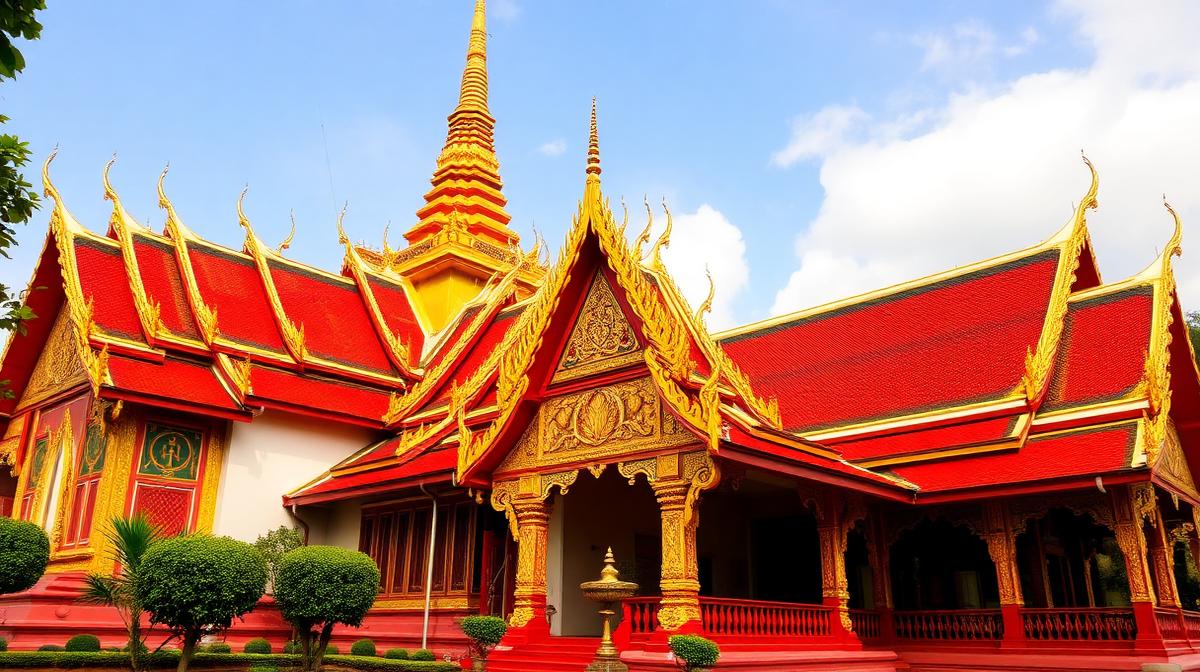
Thai Temple Colors: Sacred Gold, Red & Green in Buddhist Architecture
Thai temples (wat) are among the most colorfully expressive sacred spaces in the world. Every surface—from soaring chedi spires to intricately painted murals—uses color with deliberate spiritual intention. Understanding Thai color traditions reveals a sophisticated system where aesthetics, religion, and royal authority intersect in brilliant harmony.
The Sacred Color Hierarchy
Gold: The Color of Enlightenment
Gold (#FFD700) dominates Thai sacred architecture. In Buddhist philosophy, gold represents:
- The body of the Buddha: Gold leaf applied to Buddha images symbolizes spiritual radiance
- Merit and generosity: The act of applying gold leaf (pid thong) is itself a merit-making practice
- Impermanence: Gold leaf's fragility reminds practitioners of life's transience
- Dharma illumination: The warm glow represents the light of the Buddha's teaching
Technical application: Thai artisans use several gold variations:
- Pure gold leaf (#FFD700): Applied to Buddha images and sacred objects
- Gold lacquer (#C9A64C): Used on architectural elements
- Gold paint (#B8860B): Applied to decorative patterns
- Gold glass mosaic (#DAA520): Mirrors and colored glass create shimmering surfaces
The Thai Color-Day System
Thai culture assigns colors to days of the week, a system rooted in Hindu-Buddhist astrology:
| Day | Color | Hex Code | Planet | Significance |
|---|---|---|---|---|
| Sunday | Red | #CC0000 | Sun | Power, vitality |
| Monday | Yellow | #FFD700 | Moon | Spirituality, royalty |
| Tuesday | Pink | #FF69B4 | Mars | Compassion, love |
| Wednesday (day) | Green | #228B22 | Mercury | Growth, prosperity |
| Wednesday (night) | Gray | #808080 | Rahu | Neutrality, balance |
| Thursday | Orange | #FF8C00 | Jupiter | Wisdom, learning |
| Friday | Blue | #4169E1 | Venus | Art, beauty |
| Saturday | Purple | #800080 | Saturn | Protection, spirituality |
Thais traditionally wear the color of their birth day and consider it auspicious. This system influences everything from clothing choices to the color of Buddha images associated with each day.
Royal Yellow and the Monarchy
In Thailand, yellow (#FFC300) holds extraordinary significance:
- Monday yellow: The late King Bhumibol was born on a Monday, making yellow the royal color
- Mass adoption: During celebrations, entire cities turn yellow as citizens wear the color
- Architectural use: Royal palace buildings feature specific shades of gold-yellow
Temple Architecture Color Zones
The Ubosot (Ordination Hall)
The main worship hall uses a hierarchical color system:
- Exterior: Red (#B71C1C) and gold (#FFD700) dominate, symbolizing the Buddha's power and enlightenment
- Roof tiles: Multi-tiered roofs in green (#006400) and orange (#FF6B00) glazed tiles
- Chofa (sky tassel): Gold finials representing Garuda, the divine bird
- Door panels: Black (#0D0D0D) lacquer inlaid with mother-of-pearl—the contrast between worldly darkness and spiritual light
Mural Painting Palette
Thai temple murals use a specific traditional palette:
Core Colors:
- Red lead (#FF4500): For royal garments and sacred borders
- Indigo (#3F51B5): For sky, water, and celestial realms
- Yellow ochre (#E6A817): For royal crowns and celestial light
- Malachite green (#00A86B): For forests, nature, and the Himmapan (mythical forest)
- White lime (#FAFAF5): For clouds, faces, and sacred beings
The narrative use of color: Different color backgrounds indicate different realms:
- Gold or white backgrounds: Heavenly scenes, the life of the Buddha
- Dark blue or black backgrounds: The underworld, moral lessons
- Green backgrounds: Earth realm, daily life, and nature scenes
The Chofa and Naga Color Language
Mythical Beings in Color
Thai temple roofs are adorned with mythical creatures whose colors carry meaning:
Garuda (#FFD700 gold): The divine eagle-man, vehicle of Vishnu, always gold to represent celestial authority
Naga (#00897B green or #E65100 red-orange): The serpent deity protecting the temple:
- Green nagas represent water and fertility
- Red/orange nagas represent fire and protection
- Multi-colored nagas represent the seven-headed king naga
Kinnaree (#FF9800 orange and #4CAF50 green): Half-bird, half-human celestial beings, depicted in earth tones to represent their connection between heaven and earth
The Glass Mosaic Tradition
Reflecting Light as Spiritual Practice
Thai temples use millions of tiny glass and mirror pieces (krajeung) to create shimmering surfaces:
The psychological effect: Glass mosaic creates constantly shifting colors as light changes throughout the day. This impermanence mirrors the Buddhist teaching of anicca (impermanence)—nothing stays the same, not even the temple's appearance.
Color selection in mosaic:
- Blue and green glass: Represent water and vegetation
- Red and orange glass: Represent fire and spiritual energy
- Clear mirrors: Represent clarity of mind and enlightenment
- Gold mirrors: Represent the Buddha's wisdom
Wat Rong Khun: The White Temple Revolution
Breaking Color Conventions
Chalermchai Kositpipat's Wat Rong Khun in Chiang Rai challenged every convention by making an entirely white temple:
- White (#FFFFFF): Represents the purity of the Buddha's teachings
- Silver mirrors: Create a dazzling effect, symbolizing wisdom's reflective quality
- Gold elements: Reserved only for the interior, where the Buddha resides
This radical color choice proved that understanding tradition deeply enough allows you to break it meaningfully—a principle applicable to any design system.
Modern Design Applications
Thai-Inspired Commercial Palettes
Luxury hospitality: Gold (#C9A64C) + Deep Red (#8B1A1A) + Black (#1A1A1A)
- Evokes Thai royal elegance for hotels, spas, and premium dining
Wellness and yoga: Saffron Orange (#FF9800) + White (#FAFAFA) + Sage Green (#8BC34A)
- Channels the serenity of temple meditation spaces
Thai cuisine branding: Vermillion (#E34234) + Gold (#DAA520) + Emerald (#00A86B)
- The classic Thai restaurant palette, rooted in temple color traditions
Color Principles from Thai Design
- Gold as reverence: Use gold sparingly to elevate key elements—not everything can be sacred
- Color-meaning consistency: Once you assign meaning to a color, maintain it throughout
- Layered richness: Thai temples achieve richness through pattern and layering, not just color quantity
- Light interaction: Consider how colors will change throughout the day and in different lighting
Creating Thai-Inspired Palettes
Use Coloracci's AI tools to extract authentic Thai color palettes from temple photographs, then adapt them for digital design. Test combinations with our contrast checker to ensure accessibility while maintaining the vibrant spirit of Thai design.
Explore more cultural color traditions: Japanese Color Culture, Chinese Color Culture, Indian Color Traditions, or Korean Color Traditions.