Star Wars Lightsaber Colors: Meaning, Hex Codes and the Color Psychology of Good vs Evil
· Coloracci Team
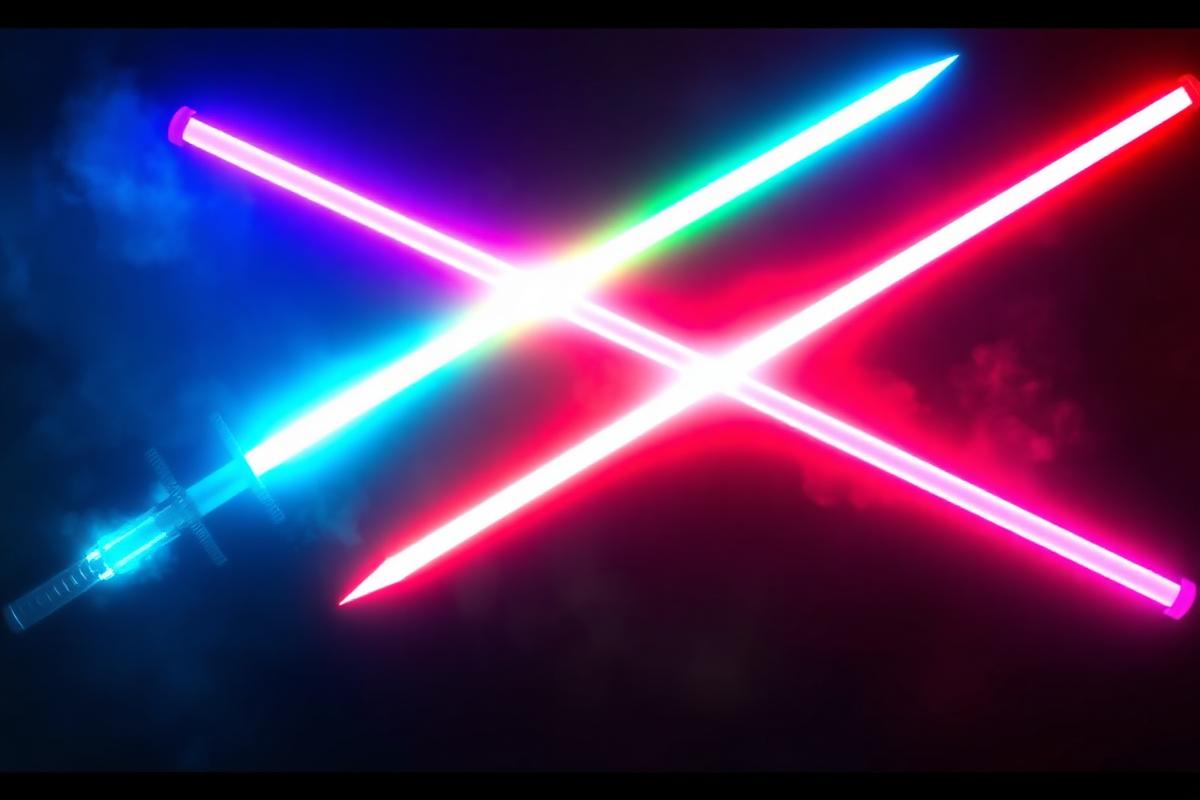
In Star Wars, you know who the villain is before he says a single word. The sword tells you.
George Lucas built an entire moral code out of color. Heroes ignite blue and green. Villains burn red. Children learn the map before they learn the plot. That is not accident — it is one of the cleanest pieces of color psychology ever put on a mass-audience screen.
But here is the part most fans never heard. In the lore, a red blade is not a fashion choice. It is a wound. The dark side cannot bond with a kyber crystal, so they crack it by force, and the crystal bleeds. Evil, written in light.
The Lightsaber Color Code: Hex Codes and Meanings
Before the lore, there was the prop department. Early Star Wars lightsabers were practical effects lit with gels and later optical compositing. The colors had to read against desert sand, forest green, and the black of space. That practical constraint is why the core palette is so blunt — high chroma, high contrast, almost no muted middle tones.
| Blade | Hex Code | Side / Role | Color Psychology |
|---|---|---|---|
| Jedi Blue | #2E75B6 |
Classic Jedi, guardians | Trust, calm authority, "safe" hero signal |
| Jedi Green | #2DB84B |
Consular Jedi, Luke (ROTJ) | Growth, wisdom, living Force |
| Sith Red | #E10600 |
Sith / Dark Side | Aggression, alarm, blood / wound |
| Mace Purple | #6B2D9B |
Unique — Mace Windu | Ambiguity between light and dark |
| Space Black | #0A0A0C |
Frame / void | The field that makes every blade pop |
Use these hexes when you need a screen-accurate feeling, not a toy catalog match. On a bright UI background, drop the chroma slightly. Against black (the Star Wars default), keep them saturated.
The rarer blades
The saga did not stop at four. Expanded canon added colors that each carry their own signal, and they are useful precisely because they are unusual.
| Blade | Hex Code | Who Carries It | What It Signals |
|---|---|---|---|
| Kyber Yellow | #F2C300 |
Jedi Temple Guards, Rey | Vigilance, protection, a new beginning |
| Sentinel White | #F5F5F7 |
Ahsoka Tano (purified crystals) | Neutrality — beyond Jedi and Sith |
| Ember Orange | #FF7A1A |
Rare Jedi and Inquisitor variants | Warmth with warning; energy under control |
| Darksaber Black | #101014 (white edge #E8E8F0) |
Mandalorian rulers | Authority earned by combat, not birth |
| Indigo | #4B3FBF |
Legends-era Jedi | Introspection, mysticism |
Notice the pattern: the further a color gets from the blue/red axis, the more the story has to explain it. Rarity is a narrative cost. Spend it deliberately.
Why the Red Blade Feels Evil Before the Character Does
Red is the fastest color the human visual system locks onto — it hijacks attention in milliseconds. Pair that with a black silhouette (Vader's armor, Kylo's mask) and you get the same isolated-color punch used in Schindler's List and the red coat: one hot signal in a cold field. In branding, the same pairing sells urgency and danger; see the psychology of red in marketing.
In-universe, the "bleeding crystal" mythos arrived later in comics and novels, but it retrofits the visual truth the films already taught: red is not chosen, it is forced. That story makes the color morally sticky in a way a simple "bad guys wear red" rule never could.
Kylo Ren's unstable blade — damage as design
Kylo Ren's saber does not just glow red; it spits, flickers and vents from a cracked crystal. The color is the same family as Vader's, but the behavior is different: uneven luminance, ragged edges, visible instability. That is characterization through render settings. Where Vader's blade is a clean, controlled line, Kylo's is a wound that will not close.
The design lesson transfers directly to interfaces and brand systems: hue tells you the category, but texture, motion and edge quality tell you the temperament. Two brands can both own red and feel nothing alike.
Accidents That Became Canon
The purple blade that should not exist
Samuel L. Jackson wanted to find himself in a battle of a hundred Jedi. He asked George Lucas for one thing: a purple blade. Lucas said no. Then he saw the dailies — and purple stayed forever. Coloristically, purple sits between blue (Jedi) and red (Sith). It is the perfect hue for a character who walks the line: a Jedi Master who taps dark-side techniques without falling. The exception became the legend because it looks like an exception.
Luke's green saber — an editing emergency
Luke's lightsaber in Return of the Jedi was built to be blue. Against Tatooine's bright blue sky, the blade simply vanished on film. So the team turned it green in post — and accidentally created the symbol of a brand-new Jedi. Practical cinematography forced a color change; lore and merchandising locked it in afterward. Designers should steal this lesson: if your accent disappears against the background, change the accent — do not fight the environment.
A Full Lightsaber Palette for Designers
You do not need twelve crystal colors for a usable system. Five roles cover brand, UI, or a fan campaign:
| Role in Design | Hex Code | Purpose |
|---|---|---|
| Hero Primary (Blue) | #2E75B6 |
Primary buttons, trust CTAs, "join the light" messaging |
| Growth Accent (Green) | #2DB84B |
Success states, progress, regenerative / nature lines |
| Alarm / Villain (Red) | #E10600 |
Destructive actions, warnings — use sparingly |
| Rare Accent (Purple) | #6B2D9B |
Premium tiers, limited drops, "chosen one" moments |
| Void Background | #0A0A0C |
Hero sections where blades (accents) must glow |
Contrast note: body text on #0A0A0C should be near-white (#F5F5F7) for AAA. Never put Sith red text on black for long copy — chroma vibration kills readability. Red is for icons, blades, and single-word labels.
Making a blade actually glow
A saber is not a flat stroke of color; it is three layers. Copy the recipe:
- Core — a near-white line (
#F7FBFF) at the center. This is what sells "energy" rather than "paint". - Body — the hue itself at full saturation, roughly 3–4× the width of the core.
- Bloom — the same hue at 20–30% opacity, blurred wide, bleeding into the background.
In CSS that is a solid element plus stacked box-shadow layers at increasing blur; in Figma it is a fill plus two outer glows. The rule that matters: the glow must be the same hue as the body, and the background must be dark enough for the bloom to have somewhere to go. Glow on white is just a smudge.
Build and stress-test combinations in the AI color palette generator, or explore harmonic ramps with the Fibonacci color generator. Need production-ready ink or paint matches for a fan poster? Convert any of these hexes with the Pantone finder. For how theaters themselves stage color before the film even starts, see cinema and movie theater color psychology.
What Lightsaber Colors Teach About Brand Palettes
- Assign moral weight early. Star Wars kids can sort good from evil by hue alone. Your brand should be that clear about primary vs. destructive actions.
- One wound color is enough. The Sith do not get a rainbow. Restraint makes red terrifying.
- Exceptions need a story. Purple works because Jackson's request + Windu's character justify it. Random accent colors without narrative become noise.
- Environment beats preference. Luke's saber went green because the sky said so. Always grade accents against the real background, not against a white Figma artboard.
- Behavior is part of the color. Kylo's flicker changes the meaning of a hue he shares with Vader. Motion and texture are palette decisions too.
Frequently Asked Questions
What do lightsaber colors actually mean? Blue is the guardian Jedi, green the consular and the living Force, red the dark side, purple the line between them, yellow the temple sentinel, and white a Force user aligned with neither order.
Why are Sith lightsabers red? In canon, a dark-side user cannot bond naturally with a kyber crystal, so they dominate it until it "bleeds" red. Visually, red was chosen first because it is the fastest alarm signal in human vision — the lore was written to justify the psychology.
What is the rarest lightsaber color? The black Darksaber is unique in canon. Among blades that recur, white and purple are the rarest, which is exactly why they mark characters who break the rules.
One color palette carries an entire war between good and evil. That is the bar for a system that actually communicates.
So be honest: what color would your lightsaber be?