National Airline Liveries Colors: A Designer's Atlas of Flag-Carrier Palettes
· Coloracci Team
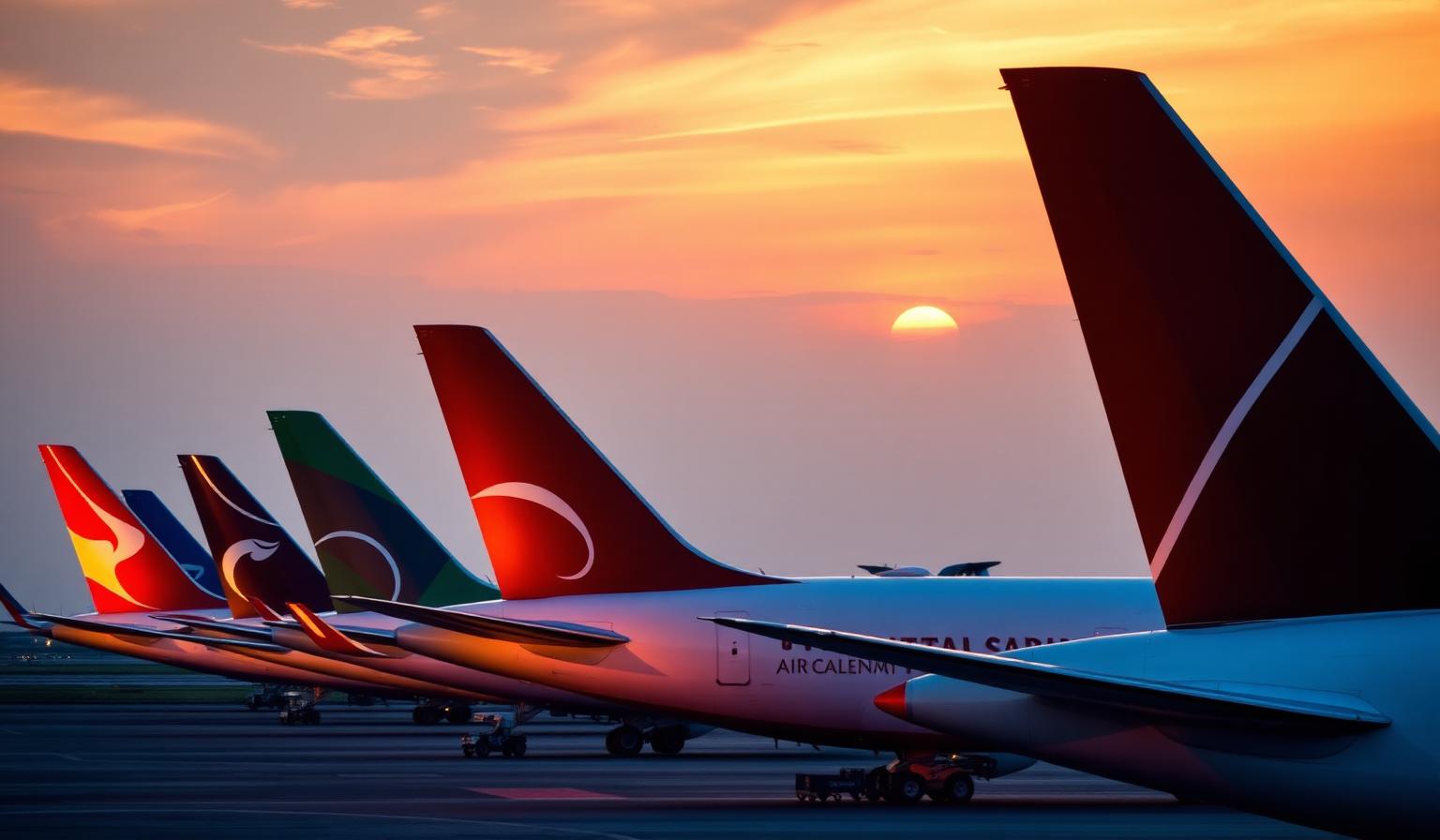
Why National Airline Liveries Colors Matter to Designers
A 60-meter aircraft is the largest brand surface most companies will ever own. It moves between continents at 900 km/h, lands in front of millions of passengers a year, and sits parked next to its competitors at every major hub on Earth. That's why national airline liveries colors are one of the most disciplined, high-stakes color systems in modern branding—every hue is engineered to survive sunlight, scale, distance, and cross-cultural perception.
For color designers, airline liveries are a uniquely useful study. Unlike most brand palettes, they have to do three jobs at once: signal national identity (a flag, a flower, a cultural symbol), communicate commercial values (safety, luxury, value, fun), and remain legible at 500 meters under any sky. The result is a global library of color decisions you can borrow from for everything from fintech apps to luxury packaging.
In this guide we break down the colors of more than 50 carriers, decode the patterns behind them, and translate the psychology into practical takeaways. If you'd rather skip ahead and start building, our Coloracci palette generator and Fibonacci-based color tool can turn any livery below into a working design system.
Complete Breakdown: National Airline Liveries Colors
The palettes below are reconstructed from each carrier's published brand guidelines, livery photography, and—where exact specs are not public—careful visual matching. Hex values are best-fit references for design use, not certified Pantone equivalents.
Flag Carriers — The Americas
- Air Canada — Air Canada Red
#D2122E, White#FFFFFF, Charcoal#1A1A1A. The maple-leaf "rondelle" anchors a palette built around national pride and reliability. - American Airlines — Flight Blue
#0078D2, Action Red#E31837, Silver#C8C9C7. The post-2013 livery leans into US flag colors with metallic undertones referencing the original "natural metal" fuselage. - United Airlines — Evo Blue
#005DAA, Rhapsody Blue#002244, White#FFFFFF. A monochrome blue identity signaling global reach and stability. - LATAM Airlines — Indigo
#1B0088, Coral Red#E5006D, White#FFFFFF. A pan-South-American identity that blends Chilean and Peruvian flag references. - Azul Brazilian Airlines — Navy Blue
#003DA5, Brazilian Green#009C3B, Yellow#FFDF00. Direct flag mapping signaling national vibrancy. - Aeromexico — Royal Blue
#1F3A93, Pink-Red#E4002B, White#FFFFFF. The "Caballero Águila" Aztec eagle adds cultural specificity to a classic patriotic palette. - US Airways (legacy) — Navy
#002F6C, Red#BF0A30, White#FFFFFF. Now retired into American's identity but a reference point for US patriotism in aviation.
Flag Carriers — Europe
- British Airways — Oxford Blue
#11498F, Chutney Red#EB2226, White#FFFFFF. The "Speedmarque" tail and Union-flag-derived ribbon project tradition and global reach. - Air France — French Blue
#002157, Red#EE2D24, White#FFFFFF. Sophistication encoded as restrained navy with a single confident red stripe. - Iberia — Iberia Red
#D40F14, Iberia Yellow#F1B434, Charcoal#2D2926. Spanish flag colors reinterpreted with a contemporary, almost editorial restraint. - ITA Airways — Savoy Blue
#0033A0, White#FFFFFF, Italian Green#008C45, Italian Red#CD212A. The fully blue fuselage is a deliberate departure from Alitalia's tricolor heritage. - Swiss International Air Lines — Swiss Red
#D8232A, White#FFFFFF. A two-color identity that mirrors the national flag exactly—an elite example of restraint. - Austrian Airlines — Austrian Red
#CC0000, White#FFFFFF, Anthracite#231F20. Crisp, minimal, technical. - TAP Air Portugal — Portuguese Red
#C8102E, Forest Green#006A4D, White#FFFFFF. The 2018 rebrand modernized a vintage palette while keeping flag references intact. - Aeroflot — Aeroflot Blue
#002984, Red#CE1126, White#FFFFFF. Classic flag carrier palette with a winged-hammer-and-sickle heritage mark. - Bulgaria Air — White
#FFFFFF, Bulgarian Green#00966E, Red#D62612. - Malev (legacy) — Hungarian Red
#CE2939, White#FFFFFF, Green#477050.
Flag Carriers — Middle East and Africa
- Emirates Airlines — Emirates Red
#D71921, Black#000000, Green#00853E, White#FFFFFF. The arabic-script tail and UAE flag bar communicate national pride layered with global luxury. - Saudia — Saudia Green
#006C35, White#FFFFFF, Gold#C9B037. Built around the Saudi flag's distinctive deep green. - El Al — El Al Blue
#002F6C, White#FFFFFF. The Star of David tail symbol pairs with national-flag blue and white for unmistakable identity. - Middle East Airlines (MEA) — Cedar Green
#0F5132, White#FFFFFF, Red#C8102E. The Lebanese cedar tree on the tail is one of the most memorable national symbols in aviation. - Royal Air Maroc — Moroccan Red
#C1272D, Green#006233. The five-pointed Moroccan star sits inside a classic crescent-and-flag palette. - Ethiopian Airlines — Ethiopian Green
#078930, Yellow#FCDD09, Red#DA121A. Pan-African tricolor used as a horizontal cheatline. - South African Airways — Sky Blue
#0072CE, Red#DE3831, Green#007749, Gold#FFB81C, Black#000000, White#FFFFFF. The rainbow-nation flag rendered as a flowing tail mark. - RwandAir — Sky Blue
#00A1DE, Sun Yellow#FAD201, Green#20603D. Soft, optimistic, and tightly tied to the Rwandan flag.
Flag Carriers — Asia and Oceania
- Air India — Maharaja Red
#A6192E, Konark Wheel Orange#E4572E, Heritage Gold#C9A227, Aubergine#3C1361. The 2023 rebrand introduced gold window trim and a Konark-Sun-Temple-derived wheel. - Korean Air — Taegeuk Sky Blue
#00256C, Light Blue#7FB2E5, White#FFFFFF, Red#CD2E3A. The Taegeuk roundel anchors a serene, premium identity. - Garuda Indonesia — Garuda Blue
#00529C, Garuda Green#007749, White#FFFFFF. The mythological Garuda bird is rendered as a sweeping, organic tail wave. - Pakistan International Airlines (PIA) — PIA Green
#006633, White#FFFFFF. A near-direct mapping of the Pakistani flag. - Philippine Airlines — Philippine Blue
#00308F, Red#CE1126, Sun Yellow#FCD116, White#FFFFFF. The sun and stars motif amplifies national symbolism. - Thai Airways International — Thai Purple
#3C1A5B, Magenta#A4196D, Gold#C8A951. One of the few airlines built around purple—an explicit reference to Thai royalty and orchids. - SriLankan Airlines — Maroon
#7B1F1F, Saffron Orange#E47B22, Forest Green#006A4E, Gold#C9A227. The peacock motif is one of the most graphically rich in aviation. - Nepal Airlines — Crimson Red
#DC143C, Royal Blue#003893, White#FFFFFF. - Uzbekistan Airways — Uzbek Sky Blue
#0099B5, White#FFFFFF, Green#1EB53A, Red#CE1126. - Air Koryo — DPRK Red
#ED1C27, White#FFFFFF, Blue#024FA2. - Qantas — Qantas Red
#E40000, Charcoal#1A1A1A, White#FFFFFF. The Flying Kangaroo on a deep red tail is one of the most recognized aviation marks; special "Flying Art" liveries collaborate with Aboriginal artists.
Flag Carriers — Mediterranean Specials
- Air Malta — Maltese Cross Red
#C8102E, White#FFFFFF. A heraldic palette built on a single national symbol.
Low-Cost Carriers and Modern Disruptors
Where flag carriers lean on national identity, low-cost and modern carriers use color to project value, fun, and category disruption.
- EasyJet — Easy Orange
#FF6600, White#FFFFFF. A near-fluorescent orange owns the budget-airline category in Europe. - Spirit Airlines — Spirit Yellow
#FFEC00, Black#000000. The "yellow plane" is intentionally polarizing, low-cost shorthand. - Southwest Airlines — Bold Blue
#304CB2, Warm Red#E51937, Sunrise Yellow#F9B612. The "Heart" livery is engineered to feel friendly without losing patriotic anchoring. - JetBlue — JetBlue Blue
#0033A0, Sky Blue#00B3E3, White#FFFFFF. A modern tech-brand palette applied to aviation. - IndiGo — IndiGo Blue
#1D2D8F, Indigo Accent#3F4DA0, White#FFFFFF. Clean, professional, calm—the visual opposite of the budget category cliché. - Virgin Atlantic / Virgin America — Virgin Red
#E10A0A, White#FFFFFF, Charcoal#222222. The red tail and "scarlet lady" nose art make Virgin one of the most recognizable liveries in the world. - Peach Aviation — Peach Pink
#E94F84, Lavender Purple#9B6BB5, White#FFFFFF. A youth-targeted Japanese carrier that breaks every aviation color convention—deliberately. - Scoot — Scoot Yellow
#FFD400, Charcoal#231F20. Pure energy-and-value coding. - Solaseed Air — Sky Green
#7AC143, White#FFFFFF. Nature, freshness, and regional Kyushu identity. - Spicejet — Spice Red
#D32229, Spice Yellow#F4B223, White#FFFFFF. - StarFlyer — Pitched Black
#0A0A0A, White#FFFFFF. Premium-minimal, more Apple than airline. - Swoop — Swoop Magenta
#E6007E, White#FFFFFF. A bold magenta mono-color identity in a sea of red and blue. - Viva — Viva Red
#D7263D, Green#2BB673, White#FFFFFF. - Alaska Airlines — Atlas Blue
#01426A, Tropical Green#00B0B9, Breeze Blue#A4D4D9. Famous for its "Salmon-Thirty-Salmon" specialty livery celebrating Pacific Northwest heritage.
Patterns & Analysis: What These Color Choices Reveal
Pull back from individual carriers and clear macro-patterns emerge across global aviation.
1. Blue dominates—and it's not an accident
More than 60% of the carriers above use blue as their primary or secondary color. Blue scores highest in cross-cultural studies for trust, calm, and competence—the exact emotional cocktail an airline wants you to feel before boarding. It also reads cleanly against any sky from Reykjavik to Singapore.
2. White is the silent workhorse
Almost every modern fuselage is white, and not for branding reasons. White reflects roughly 80% of solar radiation, reducing skin temperature by up to 10 °C, lowering fuel burn from cooling loads, and slowing UV degradation of paint and composites. The aesthetic restraint is, in this case, a thermodynamic decision.
3. The flag is the default brief
Flag carriers overwhelmingly translate the national flag into livery colors—often literally (Air France, Swiss, Aeroflot), sometimes abstractly (ITA's "all-blue Italy", Qantas's red against the Outback). For cross-cultural color strategy, this is the same logic Pantone uses when it announces a Color of the Year: a single chromatic decision becomes shorthand for an entire identity.
4. Red carries personality, not function
Red is rarely the primary color of a fuselage but almost always the personality color: tails (Qantas, Virgin), stripes (Emirates, Air France), or wordmarks. It's the same role red plays in fashion houses like Chanel—a controlled accent that prevents an otherwise neutral system from disappearing.
5. Disruptors weaponize "wrong" colors
Magenta (Swoop), pink-and-purple (Peach), pure yellow (Spirit, Scoot), and acidic orange (EasyJet) are all anti-flag-carrier signals. They communicate "we are not your grandfather's airline"—the same color logic challenger fintechs and DTC brands use to separate themselves from incumbents.
Color Psychology of Airline Liveries
Each color choice in aviation communicates a specific emotional contract with the passenger.
- Blue — Trust and serenity. Lowers perceived anxiety pre-flight; the default for any airline whose primary value is "we will get you there safely."
- Red — Energy and confidence. Signals an active, premium, often heritage-rich brand. Reads from kilometers away.
- White — Cleanliness and modernity. Functions as both psychological reassurance and operational substrate.
- Green — Nature, sustainability, calm. Increasingly used by carriers positioning around environmental responsibility (Saudia's heritage green, Solaseed Air's eco-positioning, Viva's identity).
- Yellow — Optimism and value. The de-facto color of low-cost aviation. Hard to ignore on a tarmac, hard to forget at a price comparison site.
- Purple/Magenta — Luxury or disruption. Thai Airways uses it for royal heritage; Swoop and Peach use it for contrarian positioning.
- Black — Premium minimalism. Rare in aviation because of heat absorption; when used (StarFlyer), it signals deliberate, almost luxury-good positioning.
- Gold — Prestige and ceremony. Trim color, never primary—Air India, SriLankan, Thai Airways all use it as an accent layer above the base palette.
Designer Takeaways: How to Use Airline Color Logic in Your Own Work
Even if you'll never paint a 777, the discipline behind these palettes maps almost perfectly onto digital product, brand, and packaging design.
- Pick one anchor color and one personality color. Almost every successful livery follows this rule—white or navy as the anchor, red or yellow as the personality. Two colors do 90% of the brand work; everything else is supporting structure.
- Borrow the "tail mark" pattern for digital UIs. A small, saturated accent in a high-attention location (favicon, app icon, primary CTA) does the same job as a Qantas-red tail: instant recognition without overwhelming the surface.
- Treat white as functional, not empty. The thermodynamic logic of white fuselages translates to whitespace in interfaces—it isn't "nothing", it's the base layer that lets every other color do more work.
- Use cultural symbols as containers, not paint. Air India's Konark wheel, MEA's cedar, and Qantas's kangaroo all contain color—they don't replace it. In branding terms, your symbol carries the meaning; your palette carries the feeling.
- Sample real liveries with a color tool. Drop a livery photograph into our Coloracci palette generator or run it through the Fibonacci color generator to extract a working palette in seconds—then pressure-test it against accessibility and contrast.
Quick-Reference Data Table
| Airline | Primary Color | Hex Code | Color Name | Psychological Meaning |
|---|---|---|---|---|
| Aeroflot | Blue | #002984 |
Aeroflot Blue | Trust, heritage |
| Air Canada | Red | #D2122E |
Air Canada Red | National pride, reliability |
| Air France | Blue | #002157 |
French Blue | Sophistication, identity |
| Air India | Red | #A6192E |
Maharaja Red | Heritage, energy |
| Air Koryo | Red | #ED1C27 |
DPRK Red | National identity |
| Air Malta | Red | #C8102E |
Maltese Cross Red | Heritage, symbol |
| American Airlines | Blue | #0078D2 |
Flight Blue | Patriotism, trust |
| Austrian Airlines | Red | #CC0000 |
Austrian Red | National identity |
| Azul Brazil | Navy Blue | #003DA5 |
Azul Navy | National identity, vibrancy |
| British Airways | Blue | #11498F |
Oxford Blue | Tradition, pride |
| Bulgaria Air | Green | #00966E |
Bulgarian Green | National identity |
| El Al | Blue | #002F6C |
El Al Blue | Reliability, identity |
| Emirates | Red | #D71921 |
Emirates Red | Pride, luxury |
| Ethiopian | Green | #078930 |
Ethiopian Green | Heritage, identity |
| Garuda Indonesia | Blue | #00529C |
Garuda Blue | National symbol, nature |
| Iberia | Red | #D40F14 |
Iberia Red | Passion, identity |
| ITA Airways | Blue | #0033A0 |
Savoy Blue | Elegance, identity |
| Korean Air | Blue | #00256C |
Taegeuk Blue | Serenity, national symbol |
| LATAM | Indigo | #1B0088 |
LATAM Indigo | South American identity |
| Malev | Red | #CE2939 |
Hungarian Red | National identity |
| MEA | Green | #0F5132 |
Cedar Green | Nation, nature |
| Nepal Airlines | Red | #DC143C |
Crimson Red | National identity |
| PIA | Green | #006633 |
PIA Green | National identity |
| Philippine Airlines | Blue | #00308F |
Philippine Blue | Vibrancy, identity |
| Qantas | Red | #E40000 |
Qantas Red | Heritage, boldness |
| Royal Air Maroc | Red | #C1272D |
Moroccan Red | National symbol |
| Royal Brunei | Yellow | #F4C300 |
Royal Yellow | Royalty |
| RwandAir | Sky Blue | #00A1DE |
Rwandan Sky | Optimism, identity |
| Saudia | Green | #006C35 |
Saudia Green | National pride |
| South African | Blue | #0072CE |
SAA Sky Blue | Diversity, identity |
| Swiss | Red | #D8232A |
Swiss Red | Precision, neutrality |
| SriLankan | Maroon | #7B1F1F |
SriLankan Maroon | Heritage, nature |
| TAP Portugal | Red | #C8102E |
Portuguese Red | National identity |
| Thai Airways | Purple | #3C1A5B |
Thai Purple | Royalty, elegance |
| Turkish Airlines | Red | #C70A0C |
Turkish Red | Connectivity, pride |
| United | Blue | #005DAA |
Evo Blue | Global reach |
| Uzbekistan Airways | Sky Blue | #0099B5 |
Uzbek Blue | National identity |
| Virgin Atlantic | Red | #E10A0A |
Virgin Red | Boldness, energy |
| EasyJet | Orange | #FF6600 |
Easy Orange | Affordability, fun |
| IndiGo | Blue | #1D2D8F |
IndiGo Blue | Professionalism, calm |
| JetBlue | Blue | #0033A0 |
JetBlue Blue | Modernity, comfort |
| Peach Aviation | Pink | #E94F84 |
Peach Pink | Youth, vibrance |
| Scoot | Yellow | #FFD400 |
Scoot Yellow | Energy, value |
| Solaseed Air | Green | #7AC143 |
Sky Green | Nature, freshness |
| Southwest | Blue | #304CB2 |
Bold Blue | Friendly, approachable |
| Spirit | Yellow | #FFEC00 |
Spirit Yellow | Low cost, distinctive |
| StarFlyer | Black | #0A0A0A |
Pitched Black | Premium, sleek |
| Swoop | Magenta | #E6007E |
Swoop Magenta | Modern, distinctive |
| Viva | Red | #D7263D |
Viva Red | Vibrancy, identity |
Conclusion: A Global Color Library, Hidden in Plain Sight
Every time a 787 lifts off in Lisbon and lands in Tokyo, it's carrying a color decision that survived a thousand brand-strategy meetings, an accessibility review, a thermodynamic analysis, and decades of passenger memory. National airline liveries colors are not just pretty paint jobs—they are some of the most pressure-tested identity systems on the planet, and they belong in every designer's reference library next to Pantone almanacs and Material guidelines.
Pick a livery you love. Pull its hex codes. Pressure-test the palette against your own brand's brief. You'll quickly see why airlines—across every continent and every business model—keep returning to the same handful of color decisions, and how to remix those decisions for whatever you're building next.
Ready to build your own livery-grade palette? Open the Coloracci palette generator to extract, refine, and export a complete system in minutes—or jump into the Fibonacci color generator for mathematically balanced combinations inspired by the same proportional logic the best liveries use.