Escape Room Color Design: Immersive Palettes for Puzzle Environments
· Coloracci Team
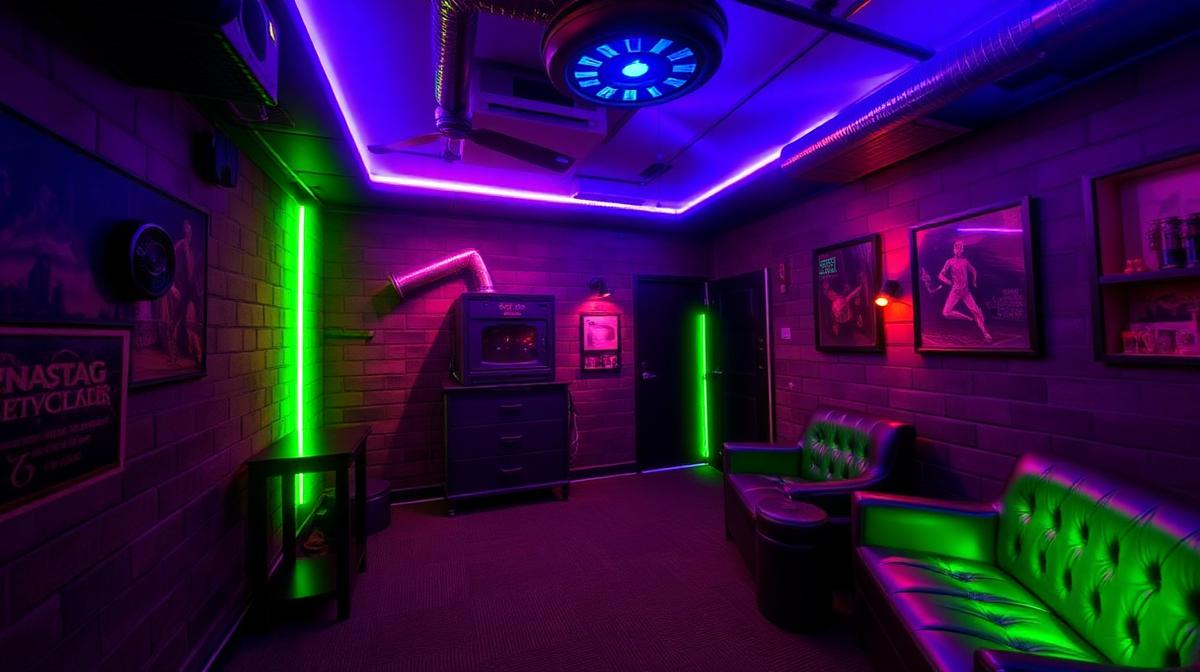
Escape Room Color Design: Immersive Palettes for Puzzle Environments
Escape rooms are one of the fastest-growing entertainment sectors, and the most successful ones treat color as a narrative tool as powerful as any puzzle mechanism. Unlike other interior design challenges where comfort is paramount, escape rooms use color to create controlled discomfort, mystery, urgency, and revelation. The color environment must simultaneously immerse players in a fictional world, subtly guide them toward solutions, and create emotional peaks that make the experience unforgettable.
The Psychology of Contained Spaces
Color-Emotion Mapping for Escape Rooms
| Emotion Target | Color Palette | Hex Codes | Room Type |
|---|---|---|---|
| Mystery/intrigue | Deep purple + gold | #2E0854 + #C9A64C | Detective, occult |
| Fear/tension | Dark red + black | #8B0000 + #0A0A0A | Horror, thriller |
| Adventure | Warm amber + dark green | #D4A017 + #2E4A3E | Explorer, treasure hunt |
| Sci-fi/tech | Cyan + dark gray | #00D4FF + #1A1A2E | Space station, laboratory |
| Historical | Sepia + cream + dark wood | #704214 + #FFFDD0 + #3E2723 | Medieval, Victorian |
| Whimsical | Bright pastels + neon accents | Multiple + #FF1493 | Fantasy, Alice in Wonderland |
| Prison/escape | Cold gray + rust | #808080 + #B7410E | Prison break, hostage |
| Underwater | Deep blue + teal + bioluminescence | #000080 + #008080 + #00FF7F | Submarine, sunken ship |
The Tension Arc Through Color
Successful escape rooms use color to create an emotional journey:
- Entry/Briefing (Neutral warm): Comfortable, trust-building—warm beige (#D2B48C), soft lighting
- Immersion (Theme-appropriate): Full thematic color—players "enter" the story world
- Rising tension (Gradually darker/more saturated): Colors intensify as time pressure builds
- Climax (Maximum contrast): The hardest puzzle in the most dramatic color environment
- Resolution (Bright, warm, celebratory): Bright lights, warm colors when the room is "escaped"
Theme-Specific Color Palettes
The Detective's Office
Classic noir mystery aesthetic:
- Walls: Dark olive green (#3D4F2F) or deep burgundy (#4A0E0E)
- Desk/furniture: Dark walnut (#3E2723) with aged brass (#B5A642)
- Lighting: Single warm desk lamp (2700K), dim ambient
- Props: Aged paper (#D4C5A9), ink black (#1A1A1A), red wax seal (#8B0000)
- Clue highlighting: Subtle UV-reactive paint invisible under normal light
The Mad Scientist's Lab
Clinical chaos aesthetic:
- Walls: Clinical white (#E8E8E8) or institutional green (#8FBC8F)
- Lighting: Cool fluorescent (5000K) with colored liquid effects
- Accent: Toxic green (#39FF14), warning orange (#FF6600), biohazard yellow (#FFD700)
- Equipment: Stainless steel (#C0C0C0), glass, clear liquids in colored solutions
- Atmosphere: Fog with colored LED uplighting—green for toxic, blue for cryogenic, red for danger
The Ancient Temple
Archaeological adventure:
- Walls: Sand stone (#C2B280), terracotta (#CC7722), dark earth (#3E2723)
- Accent: Gold (#C9A64C), turquoise (#30D5C8), deep red (#8B0000)
- Lighting: Warm torchlight effect (2700K), flickering LEDs
- Props: Aged gold (#B5A642), jade green (#00A86B), obsidian black (#0A0A0A)
- Symbols: Gold or red on dark stone backgrounds
The Space Station
Futuristic sci-fi aesthetic:
- Walls: Dark gray (#1A1A2E) or gunmetal (#2C3539)
- Panels: Backlit white (#FFFFFF) or cyan (#00D4FF)
- Warning systems: Red (#CC0000) for alerts, yellow (#FFD700) for caution, green (#00FF00) for safe
- Ambient: Blue-purple (#4169E1) ambient lighting
- Screens: Green-on-black (#00FF00 on #0A0A0A) for retro terminals, or blue-white for modern
The Victorian Séance Room
Gothic atmospheric horror:
- Walls: Deep wine red (#4E1A1A) or dark purple (#2E0854)
- Ceiling: Black (#0A0A0A) to create infinite-height illusion
- Furniture: Dark mahogany (#3E1F05) with velvet upholstery in burgundy (#4A0000)
- Lighting: Candlelight simulation (2200K), very dim
- Accent: Gold (#C9A64C) frames, crystal chandelier reflections, ghost white (#F8F8FF) for spectral elements
Clue Design Through Color
Color-Coded Puzzle Systems
| Technique | How It Works | Example |
|---|---|---|
| UV reactive | Invisible clues revealed by blacklight | Secret messages on walls |
| Color filtering | Red text visible only through red lens | Hidden numbers in patterns |
| Sequential color | Clues in a color order that matches a lock | Red→Blue→Green→Yellow = 4-digit sequence |
| Complementary reveal | Image visible only when complementary color filter applied | Pattern hidden in seemingly abstract art |
| Temperature change | Thermochromic paint reveals message when heated | Hidden map on a surface near a heat source |
Guiding Without Giving Away
Color can subtly direct players' attention:
- Warm spotlight on objects that need investigation (players unconsciously look at lit areas)
- Slight color difference in one brick, one book spine, one tile—trained escape artists look for this
- Color consistency: All functional items share a subtle color attribute (all gold screws are actual interaction points)
- Red herrings: Deliberately eye-catching colors on non-functional props to create engaging misdirection
Building and Maintenance Color Considerations
Durability Requirements
Escape room surfaces take extreme abuse:
- Wall paint: Must withstand constant touching, leaning, accidental impacts
- Recommendation: Semi-gloss or satin finish in dark colors (hides marks better)
- Props: Choose colors that age well under UV and handling—avoid colors that fade or chip conspicuously
- Flooring: Dark (#333333) or medium (#808080)—hides scuff marks from hundreds of players per week
Reset-Friendly Design
Colors should support fast room resets:
- Consistent prop placement: Color-coded marks (invisible to players) show staff where each item belongs
- Cleaning visibility: Medium-toned surfaces show when they've been properly cleaned between groups
- Replacement-friendly: Use standardized paint codes so props and surfaces can be touched up identically
Marketing Color Strategy
Website and Booking Platform
| Element | Color Strategy | Hex | Purpose |
|---|---|---|---|
| Background | Dark, atmospheric | #0A0A0A to #1A1A2E | Mysterious, immersive |
| Room thumbnails | Theme-colored borders | Room-specific | Quick identification |
| Difficulty indicators | Green-Yellow-Red gradient | #4CAF50 → #FFD700 → #CC0000 | Intuitive difficulty rating |
| CTA / Book now | Bright, contrasting | #FF6600 or #00D4FF | Clear call to action |
| Reviews/ratings | Gold stars | #FFD700 | Social proof |
Use Coloracci's AI palette tools to design immersive, theme-appropriate color palettes for escape rooms and entertainment venues.
Explore more entertainment colors: Theme Park Color Psychology, Cinema Color Psychology, Nightclub & Bar Colors, or Casino Floor Color Psychology.