What is Fibonacci Art? The Mathematical Secret Behind Beautiful Compositions
· Elena Martinez
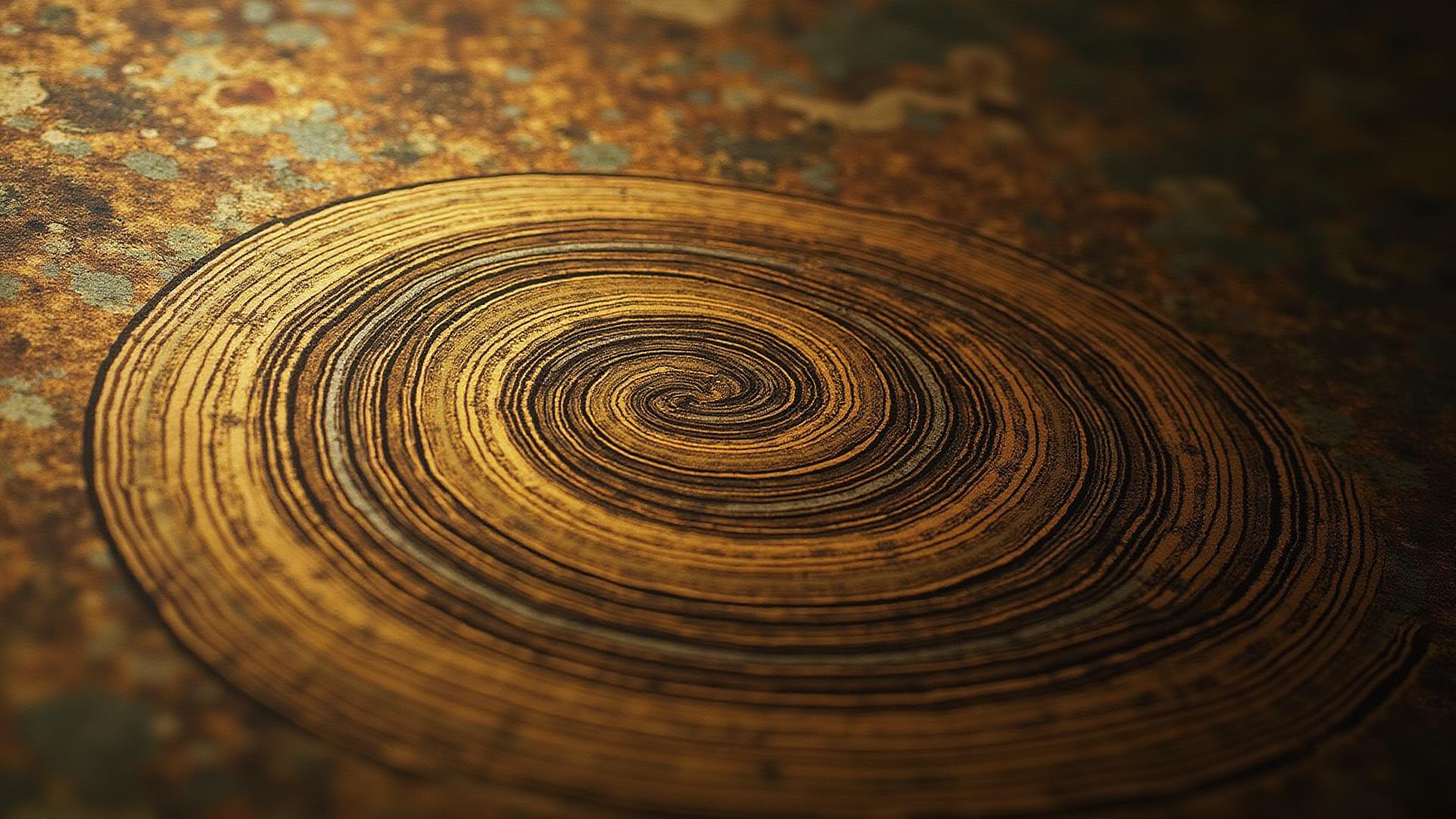
The Mathematical Secret Behind Beautiful Compositions
In a small studio in Florence, contemporary artist Marina Rossi holds up her latest painting to the afternoon light. With a golden ruler marked with curious proportions—1:1.618—she checks specific points on the canvas. "Right there," she says, pointing to where a figure's eyes meet the horizon. "That's where the mathematics demanded it be."
Rossi isn't alone in this practice. For centuries, artists have been employing a mathematical principle known as the Fibonacci sequence to create compositions that feel inherently "right" to the human eye. From Leonardo da Vinci's enigmatic Mona Lisa to Salvador Dalí's surrealist masterpieces, from ancient Greek temples to cutting-edge digital art, the Fibonacci sequence has been quietly shaping what we consider beautiful.
But what exactly is Fibonacci art, and why does this mathematical pattern resonate so deeply with human perception?
Defining Fibonacci Art
Fibonacci art refers to any visual artwork that deliberately or intuitively incorporates the Fibonacci sequence (1, 1, 2, 3, 5, 8, 13, 21, 34...) or its related golden ratio (φ ≈ 1.618) into its composition, structure, or design. This can manifest in several ways:
- The Golden Spiral: A logarithmic spiral that grows by the golden ratio with each quarter turn, often used to guide the eye through a composition
- The Golden Rectangle: A rectangle whose sides are in the ratio of 1:1.618, which can be subdivided infinitely into smaller golden rectangles
- Fibonacci Grid: A compositional grid based on Fibonacci numbers used to place focal points and guide visual hierarchy
- Proportional Relationships: Using Fibonacci ratios to determine the relative sizes of elements within an artwork
"The Fibonacci sequence isn't just a mathematical curiosity," explains Dr. Robert Chang, professor of art history at Yale University. "It's a bridge between mathematical order and aesthetic pleasure. When artists use these proportions, they're tapping into patterns that appear throughout nature—and our brains are evolutionarily wired to recognize and find pleasing."
The Historical Roots: From Ancient Greece to the Renaissance
The relationship between mathematics and art is ancient, but the explicit use of the golden ratio can be traced to classical Greece.
The Parthenon and Divine Proportion
The Parthenon in Athens (447-432 BCE) is perhaps the earliest and most celebrated example. The entire façade fits within a golden rectangle, and the spacing of its columns follows ratios that approximate phi. Whether this was intentional or the result of what the Greeks considered harmonious proportions remains debated, but the mathematical precision is undeniable.
The Greeks called these proportions the "Divine Proportion," believing they reflected cosmic order. This wasn't merely aesthetic theory—it was philosophy made visible in stone.
Leonardo da Vinci: The Mathematical Artist
No discussion of Fibonacci art is complete without Leonardo da Vinci. His obsession with proportion and mathematics led him to collaborate with mathematician Luca Pacioli, who wrote De Divina Proportione (The Divine Proportion) in 1509, with illustrations by da Vinci himself.
In the Mona Lisa (1503-1519), da Vinci employed golden rectangles throughout the composition:
- Her face fits within a perfect golden rectangle
- The ratio of her head to her body approximates phi
- The positioning of her hands and the horizon line follow golden ratio proportions
- Even the mysterious background landscape uses these mathematical divisions
His Vitruvian Man (1490) demonstrates ideal human proportions based on mathematical ratios—many of which align closely with the golden ratio. The drawing itself is positioned within overlapping squares and circles whose relationships echo Fibonacci proportions.
"Da Vinci understood that mathematics wasn't separate from art," notes Dr. Sarah Mitchell, Renaissance art specialist at the Louvre. "For him, beauty was inherently mathematical. The golden ratio wasn't a constraint—it was a tool to unlock universal harmony."
Albrecht Dürer and the Northern Renaissance
German artist Albrecht Dürer (1471-1528) was equally fascinated by mathematical proportion. His treatise Underweysung der Messung (Manual of Measurement) laid out geometric principles for artists, including methods for constructing spirals and proportional systems.
In works like Melencolia I (1514), Dürer embedded complex mathematical relationships, including magic squares and proportional systems that scholars continue to analyze.
The Techniques: How Artists Use Fibonacci
Understanding Fibonacci art requires grasping the practical techniques artists employ:
1. The Golden Spiral Method
The most iconic Fibonacci technique involves the golden spiral—a curve that expands by the golden ratio with each quarter turn.
How artists use it:
- Position key elements along the spiral's path
- Place the spiral's "eye" (the innermost point) at the composition's focal point
- Guide the viewer's gaze naturally through the artwork
Famous examples:
- Hokusai's The Great Wave off Kanagawa (1831): The wave's curl follows a golden spiral
- Michelangelo's The Creation of Adam (1512): The positioning of God and Adam along a spiral path
- Van Gogh's Starry Night (1889): The swirling sky follows multiple overlapping golden spirals
2. The Golden Rectangle Division
Artists divide their canvas using golden rectangles, creating a natural hierarchy of spaces.
The process:
- Start with a golden rectangle (1:1.618 ratio)
- Divide it into a square and a smaller golden rectangle
- Continue subdividing, creating nested golden rectangles
- Place compositional elements within these divisions
Piet Mondrian's geometric abstractions (1920s-1940s) often employed these proportions, though he arrived at them more through intuition than calculation.
3. The Fibonacci Grid
A more practical approach, especially in modern design, involves overlaying a Fibonacci grid—similar to the "rule of thirds" but with mathematically derived divisions.
The grid:
- Vertical and horizontal lines placed at Fibonacci ratios (1:1, 1:2, 2:3, 3:5, 5:8, etc.)
- Creates "sweet spots" where major grid lines intersect
- More complex than rule of thirds but more harmonious
Contemporary photographers frequently use this approach, with many cameras now offering Fibonacci grid overlays.
4. Proportional Scaling
The simplest application: ensuring that elements within a composition relate to each other by Fibonacci ratios.
Examples:
- A figure's head being 1/8th of their total height
- Background elements being 1/3 the size of foreground elements
- Color area distributions following 3:5:8 ratios
Famous Examples Across Art History
Renaissance and Baroque Masters
Sandro Botticelli's The Birth of Venus (1484-1486) The goddess Venus stands at the golden ratio point of the canvas. The shell she stands in, the flowing hair, and the positioning of surrounding figures all relate through Fibonacci proportions.
Raphael's The School of Athens (1509-1511) The architectural space is constructed using golden rectangles, with Plato and Aristotle positioned at the composition's golden ratio focal point. The receding perspective follows mathematical precision that includes phi proportions.
Rembrandt van Rijn's The Jewish Bride (c. 1665-1669) The intimate positioning of the couple and the glow of light hitting specific points follows golden ratio divisions. Rembrandt may have intuited these rather than calculated them, but the mathematical relationships are present.
Impressionism and Post-Impressionism
Georges Seurat's A Sunday Afternoon on the Island of La Grande Jatte (1884-1886) Seurat was explicitly mathematical in his approach to art. The painting's composition follows strict golden ratio divisions, with the horizon line positioned at exactly the golden ratio height.
Paul Cézanne While less overtly mathematical, Cézanne's careful construction of space and his method of building forms through geometric shapes often resulted in Fibonacci-like proportions. "Everything in nature is modeled on the sphere, cone, and cylinder," he famously said—a statement with mathematical implications.
Surrealism
Salvador Dalí Perhaps no modern artist was more explicit about using Fibonacci than Dalí. His Sacrament of the Last Supper (1955) is set within a massive golden rectangle, with Christ positioned at the golden ratio point. The painting's perspective and architectural elements are constructed using phi proportions.
Dalí owned a copy of Pacioli's De Divina Proportione and frequently referenced it. "Beauty will be convulsive, or will not be at all," he declared, but for him, that convulsive beauty needed mathematical foundations.
Abstract and Modern Art
Piet Mondrian His grid-based compositions often employed golden ratio divisions, even though he arrived at them intuitively. Analysis of his mature works reveals consistent use of Fibonacci proportions in the placement and sizing of his colored rectangles.
Le Corbusier The architect/artist developed his "Modulor" system—a proportional system based on human scale and the golden ratio. His architectural and artistic works systematically employed Fibonacci principles.
Modern and Digital Fibonacci Art
The digital age hasn't abandoned Fibonacci—if anything, it's made these principles more accessible and prevalent.
Digital Design and UI/UX
Modern interface design frequently employs Fibonacci principles:
Apple's Logo: The circles constructing the famous apple logo follow Fibonacci ratios Twitter: The old Twitter logo was constructed using golden circles Google: Various Google product interfaces use Fibonacci grids for layout
"Fibonacci grids help designers create layouts that feel naturally balanced," explains UX designer James Morrison. "When you place buttons, images, and text blocks according to these ratios, users don't consciously notice the math—they just find the interface pleasant to use."
Generative Art
Contemporary digital artists create code that generates art based on Fibonacci algorithms:
- Fractal art often incorporates Fibonacci spirals that repeat infinitely at different scales
- Procedural generation in game design uses Fibonacci sequences to create landscapes and structures that feel organic
- Audio-visual performances sync visual Fibonacci patterns to music, creating hypnotic experiences
Photography and Cinematography
Modern photographers and cinematographers explicitly use Fibonacci compositions:
Wes Anderson's films are famous for their meticulous compositions, many following golden ratio principles. His symmetrical framing often places characters and objects at Fibonacci points.
Nature photography frequently captures subjects that naturally exhibit Fibonacci patterns—nautilus shells, flower petals, pine cones—and frames them using golden spiral compositions.
The Neuroscience: Why Fibonacci Works
Why do these mathematical proportions appeal to human perception? Recent neuroscience research offers insights:
Pattern Recognition
"Our brains are prediction machines," explains Dr. Lisa Zhang, cognitive neuroscientist at MIT. "Fibonacci proportions appear throughout nature because they represent optimal growth patterns. Evolution wired our brains to recognize these patterns as 'correct' and 'harmonious' because they signal natural, healthy forms."
Visual Processing
Eye-tracking studies show that when viewing images composed with golden ratios, subjects' eyes follow more efficient scanning patterns. The composition naturally guides attention along optimal paths.
Aesthetic Preference
While cultural factors influence aesthetic judgment, cross-cultural studies suggest a subtle preference for golden ratio proportions appears across diverse populations. This isn't absolute—plenty of beautiful art ignores Fibonacci entirely—but the preference is statistically significant.
Creating Your Own Fibonacci Art
Whether you're a painter, photographer, or digital designer, you can apply these principles:
For Traditional Artists
- Create a golden ratio viewfinder: Cut a rectangle with 1:1.618 proportions to frame compositions
- Draw a Fibonacci spiral template: Create a reusable overlay for canvas or paper
- Use golden ratio calipers: Special measuring tools marked with phi proportions
- Trust your intuition: Many artists naturally gravitate toward these proportions
For Digital Artists
- Photoshop/Illustrator: Plugins and scripts can generate Fibonacci grids automatically
- Photography: Many camera apps offer golden ratio overlays in live view
- Design software: Tools like Figma have plugins for Fibonacci layout systems
- 3D modeling: Create templates based on golden rectangles and spirals
Practical Exercise
Try this compositional experiment:
- Take a blank canvas or photo frame
- Mark the golden ratio point (roughly 62% across horizontally or vertically)
- Place your main subject or focal point at this intersection
- Arrange secondary elements along a golden spiral path
- Compare the result to a rule-of-thirds composition
You may find the Fibonacci version has a subtle but compelling harmony the standard grid lacks.
The Debate: Intention vs. Intuition
An ongoing debate in art history circles questions whether historical artists consciously applied Fibonacci principles or stumbled upon them intuitively.
The intentional argument: Renaissance artists definitely knew about "divine proportion" and owned texts describing it. Da Vinci's collaboration with Pacioli proves explicit knowledge.
The intuitive argument: Many instances may be apophenia—the human tendency to find patterns where none were intended. Artists might have simply composed what "looked right."
The synthesis view: Perhaps the distinction doesn't matter. If Fibonacci proportions reflect natural patterns, and artists observe nature carefully, they'd naturally reproduce these ratios even without conscious calculation.
"The important thing isn't whether da Vinci measured everything precisely," notes Dr. Chang. "It's that these mathematical relationships exist in the work and contribute to its power. Whether that's conscious design or intuitive genius, the result is the same: art that resonates across centuries."
Beyond Beauty: Fibonacci as Meaning
Some artists use Fibonacci not just for composition but as conceptual content:
Mario Merz (1925-2003), an Italian Arte Povera artist, incorporated Fibonacci sequences directly into his installations. His igloos and structures bore neon numbers from the Fibonacci sequence, making the mathematics itself the subject.
Roman Opalka (1931-2011) spent his entire career painting numbers in sequence, incorporating mathematical principles as existential statements about time and infinity.
For these artists, Fibonacci wasn't a tool but a language—a way to explore concepts of growth, infinity, and mathematical beauty as philosophical ideas.
Conclusion: The Eternal Spiral
Fibonacci art represents something profound: a convergence of mathematics, nature, and human perception. Whether consciously applied or intuitively discovered, the Fibonacci sequence and golden ratio have shaped visual art for millennia and continue to influence contemporary design.
"Mathematics is the alphabet with which God has written the universe," Galileo supposedly said. If so, artists have been reading and translating that alphabet into visual language since ancient times.
As Marina Rossi steps back from her canvas in Florence, she smiles at the golden spiral template she's set aside. "Some people think using mathematics makes art mechanical," she says. "But for me, it's like using grammar. You need to know the rules before you can break them beautifully. The Fibonacci sequence isn't a formula for beauty—it's a starting point for exploration."
Whether you're a practicing artist or simply an appreciator of art, understanding Fibonacci composition offers a new lens for seeing the world. Next time you encounter a masterpiece in a museum, look for the mathematical harmony beneath the surface. You might be surprised how often the golden spiral appears, quietly guiding your gaze through centuries-old compositions.
The spiral continues, infinitely expanding, connecting ancient Athens to Renaissance Florence to your smartphone screen—a mathematical thread running through all human creativity.