Veterinary Clinic Colors: Calming Palettes + Hex Codes
· Coloracci Team
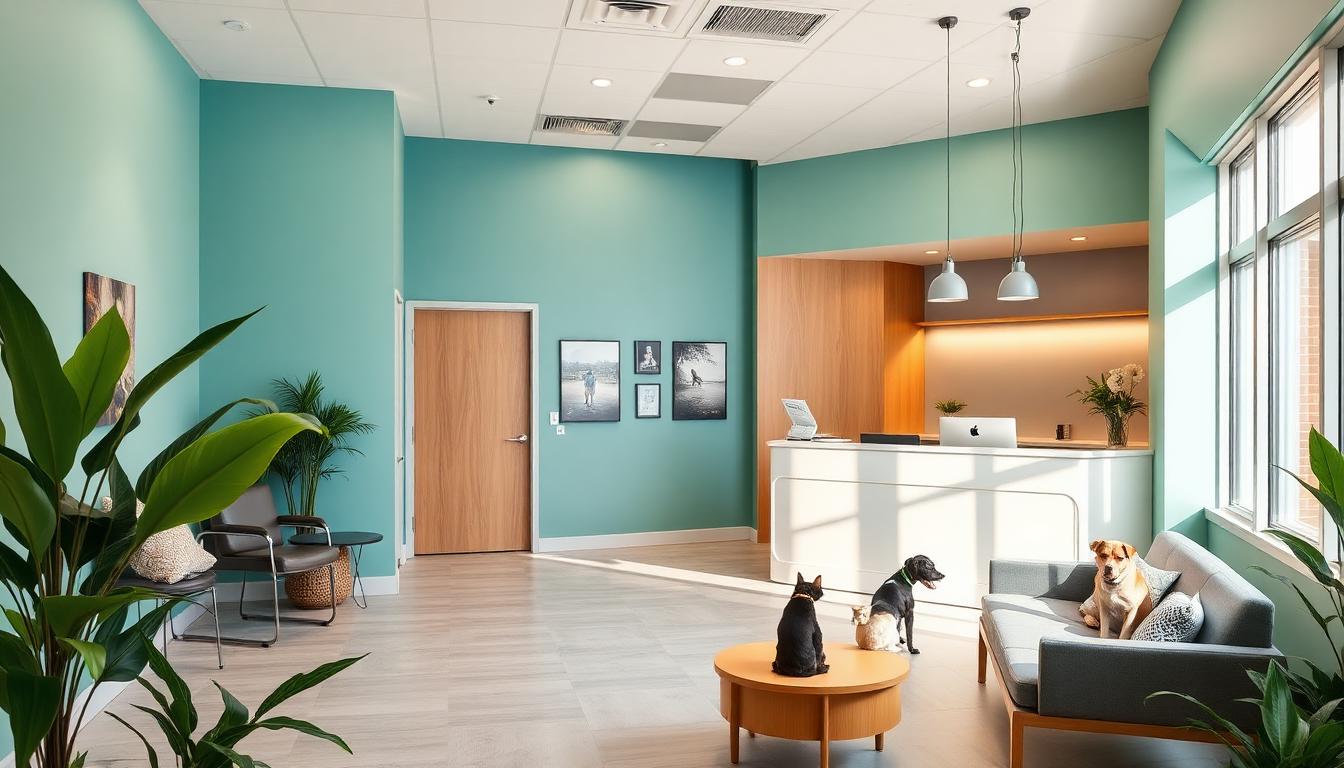
The best veterinary clinic colors are soft blues, greens and warm neutrals — they measurably lower stress in owners, and pets see them differently: dogs perceive blue and yellow but not red. Avoid stark white and heavy red. Below: research-backed palettes with hex codes for every clinic zone.
The moment a pet crosses the threshold of a veterinary clinic, every color in the environment begins shaping their stress response—and their owner's confidence in the care being provided. Veterinary clinic color psychology is a specialized discipline that balances the visual perception of animals (who see color differently than humans) with the emotional needs of anxious pet owners and the functional demands of clinical staff.
Research from the Journal of Veterinary Behavior confirms that environmental color significantly impacts animal stress markers, including cortisol levels, heart rate, and behavioral signs of distress. Yet most veterinary clinics default to sterile white or institutional beige—colors that fail both patients and their humans. This comprehensive guide explores how strategic color design transforms veterinary spaces into environments that heal, reassure, and perform.
How Animals See Color: The Foundation of Veterinary Design
Before selecting a single paint swatch, veterinary designers must understand a fundamental truth: dogs and cats see color differently than humans. Designing solely for human aesthetics can inadvertently create stressful environments for animal patients.
Canine Color Vision
Dogs possess dichromatic vision—they have two types of cone cells compared to humans' three. This means dogs see the world primarily in:
| What Humans See | What Dogs See | Design Implication |
|---|---|---|
| Red | Dark brownish-gray | Avoid red as a calming color for dogs |
| Orange | Dull gold-brown | Low contrast, not alarming |
| Yellow | Yellow (visible) | Can be used for wayfinding |
| Green | Yellowish-brown | Blends with yellow tones |
| Blue | Blue (visible) | Most reliably calming for dogs |
| Purple | Blue-gray | Perceived as blue variant |
Dogs see blue and yellow most clearly, while red and green appear as muted brownish tones. This has profound implications: a clinic painted in calming sage green for human comfort may appear as a dull, undefined brown to canine patients.
Feline Color Vision
Cats also have dichromatic vision but with some differences from dogs. They have superior night vision and are more sensitive to movement than color. Cats can distinguish blue from other colors but have limited red-green differentiation. Importantly, cats are more sensitive to high-contrast patterns and sudden brightness changes, which can trigger stress responses.
The Evidence-Based Palette for Animal Comfort
Combining animal vision science with behavioral research, the optimal veterinary color palette prioritizes:
| Color | Hex Code | Animal Impact | Human Impact |
|---|---|---|---|
| Calming Blue | #7FB3D3 | Visible to dogs/cats, reduces arousal | Builds trust, signals professionalism |
| Soft Teal | #6BAFA6 | Perceived as soothing blue-green | Fresh, clean, modern feel |
| Warm Sage | #B2C4A8 | Neutral to most animals | Calming, natural association |
| Soft Lavender | #C4B7D4 | Perceived as blue by animals | Gentle, nurturing atmosphere |
| Warm Cream | #F5ECD7 | Low-contrast, non-threatening | Warm, welcoming, clean |
| Natural Wood | #C4A882 | Familiar, non-clinical | Organic, trustworthy |
Waiting Room Design: The First Impression
The waiting room is where pet owner anxiety peaks. They're worried about their animal, surrounded by other stressed pets, and making financial decisions about care. Strategic color design in this space directly impacts client retention and satisfaction.
The Trust-Building Palette
Research in Environmental Psychology demonstrates that healthcare waiting rooms using blue-green palettes reduce perceived wait times by up to 22% compared to neutral spaces. For veterinary clinics, this translates to:
Primary Walls (60%): Soft teal (#6BAFA6) or calming blue (#7FB3D3)—these colors are visible to both dogs and cats as soothing blue tones, while signaling competence and cleanliness to human clients.
Secondary Surfaces (30%): Warm cream (#F5ECD7) or light warm gray (#E8E2D9)—these provide contrast without creating the harsh clinical feel of pure white. Natural wood elements in this zone add organic warmth.
Accent Elements (10%): Warm amber (#E8A849) or soft coral (#E8907A)—used sparingly on signage, artwork, or decorative elements to add vitality without overstimulation.
Separation Strategy
Smart veterinary clinics create color-coded zones within waiting areas:
- Dog waiting zone: Blue-dominant palette (#7FB3D3 walls) with blue seating—the color dogs perceive most clearly and find calming
- Cat waiting zone: Softer lavender (#C4B7D4) with enclosed, darker seating areas—cats prefer lower light and less visual stimulation
- Exotic pet area: Neutral warm tones (#F5ECD7) with natural textures—minimizes overwhelming sensory input
Exam Room Color Psychology
The exam room is the most psychologically complex space in a veterinary clinic. It must simultaneously:
- Calm the animal during potentially painful procedures
- Reassure the owner about the quality of care
- Support the veterinarian in accurate clinical assessment
- Enable accurate color assessment of skin, gums, and tissue
The Clinical Color Balance
A critical consideration often overlooked: veterinary staff need to assess mucous membrane color, skin conditions, and wound healing—tasks that require accurate color perception. Walls painted in strong colors can cast colored reflections that distort clinical assessment.
The solution is a neutral-warm base with strategic accent walls:
| Surface | Recommended Color | Hex Code | Rationale |
|---|---|---|---|
| Primary walls (3 of 4) | Warm white | #F5F0E8 | Accurate clinical color rendering |
| Accent wall | Calming blue | #7FB3D3 | Pet-facing wall reduces animal stress |
| Ceiling | Soft cream | #FAF6EF | Reduces harsh overhead light bounce |
| Floor | Warm gray | #B8B0A4 | Hides fur/dirt, non-slip visual cue |
| Cabinetry | Natural wood | #C4A882 | Organic warmth, reduces clinical feel |
| Exam table | Soft blue-gray | #A8B8C4 | Calming for animals on the surface |
The "Fear Free" Color Approach
The Fear Free certification program—adopted by thousands of veterinary clinics worldwide—explicitly recommends avoiding:
- Bright white walls (creates harsh, anxiety-inducing environments)
- Red or orange accents (invisible to animals but associated with danger by humans)
- High-contrast patterns (trigger prey-animal stress responses)
- Glossy surfaces (create reflections that startle animals)
Instead, Fear Free clinics use matte finishes in soft, cool-toned colors with warm lighting (2700-3000K) to create environments where animals voluntarily approach rather than retreat.
Surgery & Treatment Areas
Surgical suites in veterinary clinics follow medical color standards adapted for animal care:
| Area | Color | Hex Code | Purpose |
|---|---|---|---|
| Surgery walls | Medical green | #8FBBA8 | Reduces eye fatigue during procedures |
| OR ceiling | Soft blue | #B8D4E8 | Calming for conscious sedation cases |
| Recovery rooms | Warm lavender | #D4C8E0 | Promotes post-anesthetic calm |
| ICU monitoring | Soft teal | #6BAFA6 | Balance of alertness and calm |
| Pharmacy area | Clean white | #F8F8F5 | Accurate medication identification |
Surgical green (#8FBBA8) is particularly important in veterinary surgery. The color is complementary to red (the color of blood and tissue), which reduces visual fatigue during long procedures—a principle borrowed from human surgical suite design.
Boarding & Kennel Facilities
Extended-stay environments require careful color psychology to minimize chronic stress in boarded animals:
Canine Boarding
Dogs in boarding facilities show lower cortisol levels in environments painted with:
- Soft blue (#7FB3D3) on kennel walls facing the animal
- Warm cream (#F5ECD7) on corridor walls visible during walks
- Natural wood tones on sleeping platform areas
Avoid: Red, bright orange, or high-contrast striped patterns in boarding facilities. These create sustained arousal that leads to chronic stress, excessive barking, and destructive behavior.
Feline Boarding
Cat boarding requires an entirely different approach:
- Darker, muted tones (#8A9BA6) create the den-like environment cats prefer
- Soft lavender (#C4B7D4) promotes relaxation in communal cat rooms
- Minimal visual complexity—cats in visually busy environments show 34% higher stress markers
Grooming Salon Color Design
Pet grooming salons bridge the gap between clinical care and retail experience. The color palette must:
- Keep animals calm during grooming procedures
- Appeal to pet owners as an aspirational lifestyle service
- Photograph well for social media (a key marketing channel)
The Instagram-Ready Calm Palette
| Element | Color | Hex Code | Dual Purpose |
|---|---|---|---|
| Walls | Soft sage | #B2C4A8 | Calming + photographs beautifully |
| Grooming stations | White with teal | #6BAFA6 | Clean look + animal-soothing |
| Retail display | Warm blush | #E8C4B8 | Premium feel + Instagram aesthetic |
| Signage | Navy | #2C3E5A | Professional + high contrast for readability |
| Towels/accessories | Soft blue | #7FB3D3 | Brand consistency + animal comfort |
Pet Owner Trust: The Human Psychology
While animal comfort drives clinical design, pet owner psychology drives business success. Color choices signal:
Competence & Cleanliness
- Blue (#7FB3D3) consistently ranks as the most trusted color in healthcare settings
- Teal (#6BAFA6) signals both medical expertise and modern, caring approach
- White accents (not dominant) communicate sterility and precision
Warmth & Compassion
- Warm wood tones (#C4A882) signal that the clinic cares about comfort, not just efficiency
- Soft greens (#B2C4A8) evoke natural healing and wellness
- Avoiding institutional gray separates premium veterinary care from budget clinics
Premium Positioning
Veterinary clinics using warm-toned color palettes with natural materials report:
- 28% higher client willingness to approve recommended treatments
- 35% higher satisfaction scores in post-visit surveys
- 42% higher likelihood of recommending the clinic to friends
Staff Efficiency & Wellbeing
Clinic staff spend 8-12 hours daily in these environments. Color design impacts their performance:
| Staff Need | Color Solution | Impact |
|---|---|---|
| Sustained focus | Soft blue workspace (#7FB3D3) | Reduces mental fatigue by 18% |
| Accurate diagnostics | Neutral exam rooms (#F5F0E8) | Prevents color cast on clinical assessment |
| Break room recovery | Warm sage (#B2C4A8) | Promotes genuine mental reset |
| Lab accuracy | Clean white (#F8F8F5) | Optimal for sample analysis |
| Reduced compassion fatigue | Nature-connected palette | 23% lower burnout rates |
Emergency & After-Hours Design
Emergency veterinary facilities face unique color challenges—clients arrive in heightened emotional states with critically ill animals:
- Reception: Warm blue-gray (#8A9BA6) signals calm competence without appearing casual
- Triage area: Soft teal (#6BAFA6) maintains clinical readiness while reducing panic
- Waiting during procedures: Warm lavender (#C4B7D4) with soft lighting promotes patience
- Bereavement room: Warm, muted earth tones (#C4B4A0) with natural textures for comfort during end-of-life decisions
The bereavement or comfort room deserves special attention. This space should feel distinctly different from clinical areas—warmer, softer, with residential rather than medical character. Colors like warm taupe (#C4B4A0), dusty rose (#D4A8A8), and soft cream (#F5ECD7) with fabric textures and warm lighting (2700K) create a dignified space for grief.
Implementation Checklist for Veterinary Designers
- Audit current palette against animal vision science—eliminate colors that inadvertently stress patients
- Zone the facility by function: waiting, exam, surgery, boarding, retail
- Apply the 60-30-10 rule within each zone using the evidence-based palette
- Install warm lighting (2700-3000K) throughout non-surgical areas
- Use matte finishes on all surfaces to eliminate glare and reflections
- Create species-specific areas with tailored color approaches for dogs vs. cats
- Test with photography—ensure the palette photographs well for marketing
- Train staff on the psychology behind design choices to reinforce the brand story
Conclusion
Veterinary clinic color psychology operates at the fascinating intersection of animal vision science, human emotional psychology, and clinical functionality. The most successful clinics recognize that color isn't decoration—it's medicine. A properly designed color environment reduces the need for chemical sedation, increases owner compliance with treatment plans, and creates the kind of experience that transforms a stressful necessity into a trusted relationship.
By understanding how dogs see blue but not red, how cats prefer darkness over brightness, and how pet owners equate warm, professional environments with superior care, veterinary designers can create spaces that genuinely heal—before treatment even begins.
The evidence is clear: clinics that invest in evidence-based color design see measurable improvements in animal welfare, client satisfaction, staff retention, and business performance. In an industry where trust is everything, the right colors speak louder than any marketing campaign.