Olympic Uniform Colors: The Complete Guide to National Team Colors, Hex Codes & Color Psychology
· Coloracci
Watch: The Colors of Olympic Sports Uniforms Song
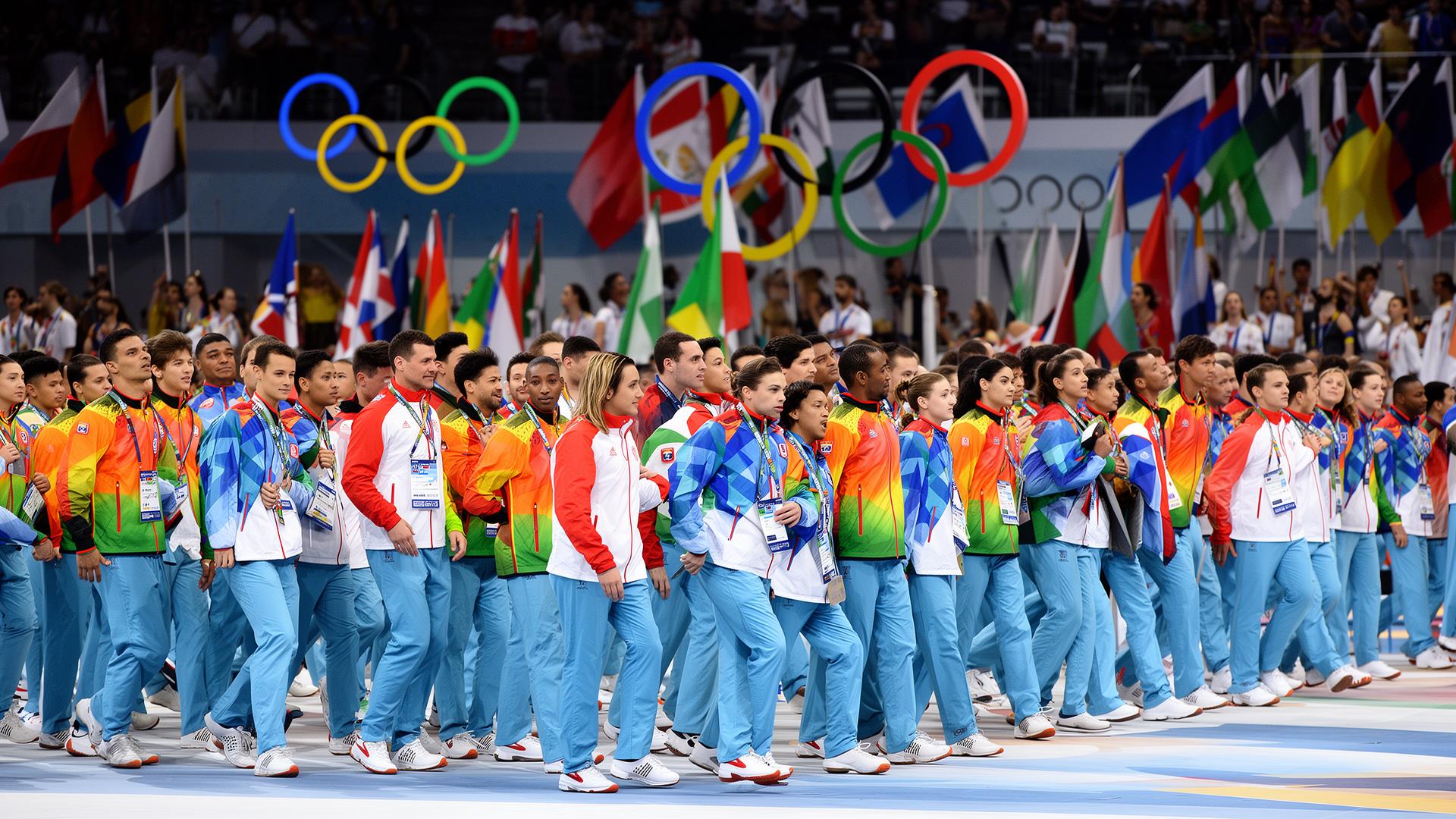
Every four years, the Olympic Games transform into the world's largest showcase of national color identity. Over 1.5 billion viewers tune in — and before they register a single athletic performance, they absorb color. The bold red of China, the emerald green of Australia, the unmistakable navy of Team USA — Olympic uniform colors communicate national pride, cultural heritage, and competitive psychology in ways that words never could.
For designers and color enthusiasts, the Olympics represent a masterclass in how color operates at scale. Every uniform, every ceremony outfit, every national delegation tells a story through its palette. Understanding these choices isn't just sports trivia — it's a deep dive into how color shapes perception, identity, and even athletic performance.
This guide breaks down the exact hex codes, color psychology, and design secrets behind the world's most iconic Olympic uniform colors.
The Olympic Rings: The Original Color System
Before examining individual nations, we need to understand the foundation. The Olympic rings — designed by Pierre de Coubertin in 1913 — use five specific colors:
| Ring | Color Name | Hex Code | Purpose |
|---|---|---|---|
| 🔵 | Olympic Blue | #0081C8 | Europe |
| 🟡 | Olympic Yellow | #FCB131 | Asia |
| ⚫ | Olympic Black | #000000 | Africa |
| 🟢 | Olympic Green | #00A651 | Oceania |
| 🔴 | Olympic Red | #EE334E | Americas |
These five colors, combined with the white background, were deliberately chosen so that every national flag in the world contains at least one of them. It's one of the most elegant color system designs in history — a universal palette built from just five hues that achieves global inclusivity.
The rings demonstrate a fundamental design principle: constraint breeds universality. By limiting the palette, Coubertin created a symbol that transcends language, culture, and geography.
Complete National Team Color Breakdown
Here is the definitive reference table of Olympic uniform colors for the world's major competing nations, with verified hex codes and their psychological significance:
The Americas
🇺🇸 United States
- Old Glory Blue | #002868 | Trust, reliability, patriotism
- Old Glory Red | #BF0A30 | Passion, determination, courage
Team USA's palette — anchored by Ralph Lauren's iconic designs — centers on a deep navy blazer (#1B2A4A) with red and white accents. The 2024 Paris Olympics featured light denim elements for the opening ceremony and striking white moto jackets for the closing. The navy-red-white triad projects both authority and approachability.
🇨🇦 Canada
- Maple Red | #FF0000 | Strength, pride, national identity
Canada commits fully to red-on-red, creating one of the most visually striking delegations at any Games. The monochromatic approach is bold — it sacrifices subtlety for instant recognition. From a color psychology perspective, this all-red strategy triggers immediate emotional response and ensures Canada stands out in any crowd.
🇧🇷 Brazil
- Canary Yellow | #FFDF00 | Joy, energy, tropical spirit
- Verde (Green) | #009739 | Nature, Amazon, hope
Brazil's yellow-green combination is one of the most recognizable in world sport. The vibrant canary yellow radiates warmth and optimism, while the green connects to the Amazon rainforest and national identity. Together, they create a palette that feels alive — perfectly capturing Brazil's exuberant sporting culture.
🇯🇲 Jamaica
- Jamaican Green | #009B3A | Hope, agriculture
- Jamaican Gold | #FED100 | Natural wealth, sunshine
- Black | #000000 | Strength, creativity
Jamaica's tricolor palette is one of the most distinctive in Olympic history, instantly associated with sprinting excellence and Caribbean energy.
Europe
🇫🇷 France
- French Blue | #002395 | Elegance, sophistication
- French Red | #ED2939 | Revolution, passion
For Paris 2024, Team France elevated their uniform game dramatically. Berluti designed midnight blue tuxedos with a French flag patina shawl collar for the opening ceremony, while designer Stéphane Ashpool created a white base uniform with gradient colors representing French diversity. The sophistication of these designs reflects France's position at the intersection of sport and fashion.
🇬🇧 Great Britain
- Union Blue | #012169 | Tradition, authority
- British Red | #C8102E | Empire, strength
Team GB's deep navy blue projects institutional authority and centuries of sporting tradition. The red accent adds energy without overwhelming the composed, regal tone of the overall palette.
🇩🇪 Germany
- Schwarz (Black) | #000000 | Power, determination
- Rot (Red) | #DD0000 | Courage, strength
- Gold | #FFCC00 | Achievement, unity
Germany's tricolor derives directly from their flag and carries deep historical significance. The black-red-gold combination dates to the 19th century and symbolizes the struggle for unity and freedom.
🇮🇹 Italy
- Azzurro (Sky Blue) | #0066B2 | Sky, Mediterranean, tradition
Italy's choice of azzurro — sky blue — rather than their flag colors (green, white, red) is one of the most fascinating stories in Olympic uniform colors. The blue comes from the House of Savoy, Italy's former royal family, and has become so iconic that Italian athletes are simply called "gli Azzurri."
🇳🇱 Netherlands
- Oranje (Orange) | #FF6600 | Energy, enthusiasm, Dutch identity
The Dutch orange is one of the most vibrant colors in Olympic competition. Derived from the House of Orange-Nassau, this color makes the Netherlands delegation impossible to miss. In color psychology, orange combines the energy of red with the happiness of yellow — a perfect athletic color.
🇸🇪 Sweden
- Swedish Blue | #006AA7 | Loyalty, trust
- Swedish Yellow | #FECC02 | Generosity, warmth
Sweden's blue-yellow combination creates one of the highest-contrast palettes in Olympic competition, ensuring maximum visibility and recognition.
Asia & Oceania
🇨🇳 China
- Chinese Red | #DE2910 | Luck, prosperity, power
- Imperial Yellow | #FFDE00 | Royalty, earth
China's red carries millennia of cultural weight. In Chinese tradition, red symbolizes luck, prosperity, and celebration — making it far more than a simple color choice. It's a cultural statement that resonates with 1.4 billion people.
🇯🇵 Japan
- Hinomaru Red | #BC002D | Sun, vitality, energy
- Pure White | #FFFFFF | Purity, honesty
Japan's palette — derived directly from the Hinomaru (circle of the sun) flag — is minimalist perfection. The single red circle on white represents the rising sun, and their uniform designs reflect the same aesthetic restraint that defines Japanese design philosophy.
🇰🇷 South Korea
- Taegeuk Red | #CD2E3A | Positive cosmic forces
- Taegeuk Blue | #003478 | Negative cosmic forces, balance
South Korea's red-blue combination derives from the Taegeuk symbol — the Korean interpretation of yin and yang. The colors represent cosmic balance, making their palette one of the most philosophically rich in Olympic competition.
🇦🇺 Australia
- Australian Green | #00843D | Land, nature
- Australian Gold | #FFCD00 | Sunshine, beaches, wealth
Australia's green and gold evoke the wattle flower and the golden beaches of the continent. At Paris 2024, their teal blazers (#008080) with yellow and white skirts created one of the most talked-about ceremony looks.
🇲🇳 Mongolia
- Eternal Blue Sky | #006DB7 | Freedom, eternity
Mongolia's 2024 Olympic uniforms went viral for featuring traditional deels — long ceremonial robes — that showcased Mongolian cultural heritage. The deep blue references the "Eternal Blue Sky" central to Mongolian spirituality, proving that Olympic uniform colors can be vehicles for cultural storytelling.
Africa
🇰🇪 Kenya
- Kenyan Red | #BB0000 | Blood of patriots
- Kenyan Green | #006600 | Natural wealth
Kenya's colors carry the weight of their independence struggle, with red honoring the blood shed by freedom fighters. On the Olympic stage, these colors have become synonymous with distance running excellence.
Color Psychology in Competition: Does Color Win Medals?
The relationship between Olympic uniform colors and competitive performance is backed by fascinating research:
The Red Advantage
A landmark study from the 2004 Athens Olympics found that athletes wearing red won 55% of their matches across boxing, wrestling, taekwondo, and freestyle wrestling. In close bouts, the advantage climbed to 62%. Researchers theorize that red signals dominance and aggression — both to opponents and to judges.
This isn't just Olympic data. Studies across sports consistently show that red-wearing teams and athletes enjoy a measurable psychological edge. Red increases heart rate, elevates perceived threat levels, and may even affect referee decisions.
Blue for Focus
While red dominates in combat sports, blue excels in precision disciplines. Blue's calming properties reduce stress and promote mental clarity — crucial for sports like archery, shooting, and gymnastics where composure determines success.
The Black Intimidation Effect
Teams wearing black receive more penalties — a phenomenon first documented with the Pittsburgh Penguins in hockey. Black signals aggression and authority, which can both intimidate opponents and bias officials toward perceiving more aggressive play. Germany's black-inclusive palette and New Zealand's All Blacks are prime examples of this psychological warfare through color.
Yellow for Reaction Time
Yellow is the most visible color in daylight and has been shown to increase mental alertness and reaction speed. Jamaica's gold-heavy palette may contribute to their sprinting dominance — both through the psychological boost to athletes and the visual impact on competitors.
Paris 2024 Spotlight: Uniforms That Made History
Paris 2024 set a new standard for Olympic uniform design, with several delegations creating cultural moments:
- Team France (Berluti): Midnight blue tuxedos elevated ceremony wear to haute couture level
- Team France (Ashpool): White base with gradient colors celebrating French diversity
- Mongolia: Traditional deels went viral, proving cultural authenticity resonates globally
- Team USA (Ralph Lauren): Navy blazers with denim accents balanced tradition with contemporary American style
- Australia: Teal blazers broke from the expected green-gold, creating a fresh modern look
- Haiti & Chinese Taipei: Hand-crafted cultural motifs demonstrated that Olympic uniforms can be art
The Paris 2024 event palette itself — #f292b7 (rose), #d6be76 (gold), #1d87c2 (blue), #002e54 (navy), #a499c3 (lavender) — influenced how team colors appeared in broadcast and venue contexts.
Patterns & Analysis: What National Colors Reveal
Analyzing Olympic uniform colors across all competing nations reveals striking patterns:
Red dominates: More nations use red as a primary color than any other hue. Red appears in the palettes of the USA, France, Great Britain, China, Japan, Germany, Canada, South Korea, and Kenya. This isn't coincidence — red is the most emotionally potent color, associated with passion, power, and national sacrifice across cultures.
Blue is universal: From the deep navy of Team USA to Italy's azzurro to France's bleu, blue appears across continents and cultures. Blue consistently ranks as the world's most-liked color, and its associations with trust, stability, and depth make it a natural choice for national identity. As we've explored in our analysis of color trends throughout history, blue has maintained its prominence across centuries.
Green signals nature: Australia, Brazil, Jamaica, and Kenya all use green to connect their national identity to the natural world — forests, agriculture, and landscapes that define their geography.
Gold equals aspiration: The prevalence of gold and yellow across Olympic palettes (Australia, Brazil, Germany, Jamaica, Sweden) reflects the ultimate Olympic aspiration — the gold medal itself.
Designer Takeaways: Olympic Color Lessons for Real Projects
The color strategies behind Olympic uniforms offer powerful lessons for any design project:
1. Cultural Color Research is Non-Negotiable
Italy doesn't use its flag colors for uniforms — they use azzurro from royal heritage. Always research the cultural depth behind color choices rather than making surface-level assumptions.
2. Monochromatic Boldness Works
Canada's red-on-red approach proves that committing fully to a single color can be more powerful than a complex palette. Sometimes restraint means using one color with total conviction.
3. Contrast Creates Recognition
Sweden's blue-yellow and Brazil's yellow-green work because they pair complementary or near-complementary colors. High contrast ensures visibility and memorability at any scale.
4. Color Carries Psychological Weight
The research on red's competitive advantage shows that color isn't just aesthetic — it actively influences perception and behavior. Choose your palette with awareness of what it communicates subconsciously.
5. Heritage Builds Authenticity
Mongolia's viral deels succeeded because they were authentically cultural. When colors connect to genuine heritage rather than trend-chasing, they resonate more deeply with audiences.
Explore these principles in your own work with Coloracci's design tools — build Olympic-inspired palettes, test contrast ratios, and discover color harmonies that carry the same emotional weight as the world's most iconic national palettes.
Complete Reference Table
| Country | Primary Color | Hex Code | Color Name | Psychological Meaning |
|---|---|---|---|---|
| 🇺🇸 USA | Navy Blue | #002868 | Old Glory Blue | Trust, reliability, patriotism |
| 🇺🇸 USA | Red | #BF0A30 | Old Glory Red | Passion, determination, courage |
| 🇫🇷 France | Blue | #002395 | French Blue | Elegance, sophistication |
| 🇫🇷 France | Red | #ED2939 | French Red | Revolution, passion |
| 🇬🇧 Great Britain | Navy Blue | #012169 | Union Blue | Tradition, authority |
| 🇬🇧 Great Britain | Red | #C8102E | British Red | Empire, strength |
| 🇨🇳 China | Red | #DE2910 | Chinese Red | Luck, prosperity, power |
| 🇨🇳 China | Yellow | #FFDE00 | Imperial Yellow | Royalty, earth |
| 🇦🇺 Australia | Green | #00843D | Australian Green | Land, nature |
| 🇦🇺 Australia | Gold | #FFCD00 | Australian Gold | Sunshine, beaches, wealth |
| 🇯🇵 Japan | Red | #BC002D | Hinomaru Red | Sun, vitality, energy |
| 🇯🇵 Japan | White | #FFFFFF | Pure White | Purity, honesty |
| 🇧🇷 Brazil | Yellow | #FFDF00 | Canary Yellow | Joy, energy, tropical spirit |
| 🇧🇷 Brazil | Green | #009739 | Verde | Nature, Amazon, hope |
| 🇩🇪 Germany | Black | #000000 | Schwarz | Power, determination |
| 🇩🇪 Germany | Red | #DD0000 | Rot | Courage, strength |
| 🇩🇪 Germany | Gold | #FFCC00 | Gold | Achievement, unity |
| 🇨🇦 Canada | Red | #FF0000 | Maple Red | Strength, pride |
| 🇮🇹 Italy | Blue | #0066B2 | Azzurro | Sky, Mediterranean, tradition |
| 🇳🇱 Netherlands | Orange | #FF6600 | Oranje | Energy, enthusiasm |
| 🇰🇷 South Korea | Red | #CD2E3A | Taegeuk Red | Positive cosmic forces |
| 🇰🇷 South Korea | Blue | #003478 | Taegeuk Blue | Balance, cosmic forces |
| 🇯🇲 Jamaica | Green | #009B3A | Jamaican Green | Hope, agriculture |
| 🇯🇲 Jamaica | Gold | #FED100 | Jamaican Gold | Natural wealth, sunshine |
| 🇯🇲 Jamaica | Black | #000000 | Black | Strength, creativity |
| 🇰🇪 Kenya | Red | #BB0000 | Kenyan Red | Blood of patriots |
| 🇰🇪 Kenya | Green | #006600 | Kenyan Green | Natural wealth |
| 🇲🇳 Mongolia | Blue | #006DB7 | Eternal Blue Sky | Freedom, eternity |
| 🇸🇪 Sweden | Blue | #006AA7 | Swedish Blue | Loyalty, trust |
| 🇸🇪 Sweden | Yellow | #FECC02 | Swedish Yellow | Generosity, warmth |
Conclusion: Color as National Identity
Olympic uniform colors are far more than fabric choices — they're distillations of national identity into pure visual language. Every hex code carries centuries of history, cultural values, and psychological intent. From Ferrari's rosso corsa on the racetrack to Old Glory Blue on the Olympic stage, color remains humanity's most powerful nonverbal communicator.
The 2026 season brings new opportunities for color evolution, with updated regulations and fresh design perspectives from nations around the world. As designers, understanding these color stories enriches our own work — whether we're building a brand, designing an interface, or crafting a presentation.
Want to create your own Olympic-inspired palette? Try Coloracci's AI-powered palette generator to build color harmonies inspired by the world's most iconic national palettes. From the deep navy of Team USA to the vibrant orange of the Netherlands, discover combinations that carry the emotional weight and cultural depth of Olympic color traditions.